
Last updated November 15, 2026
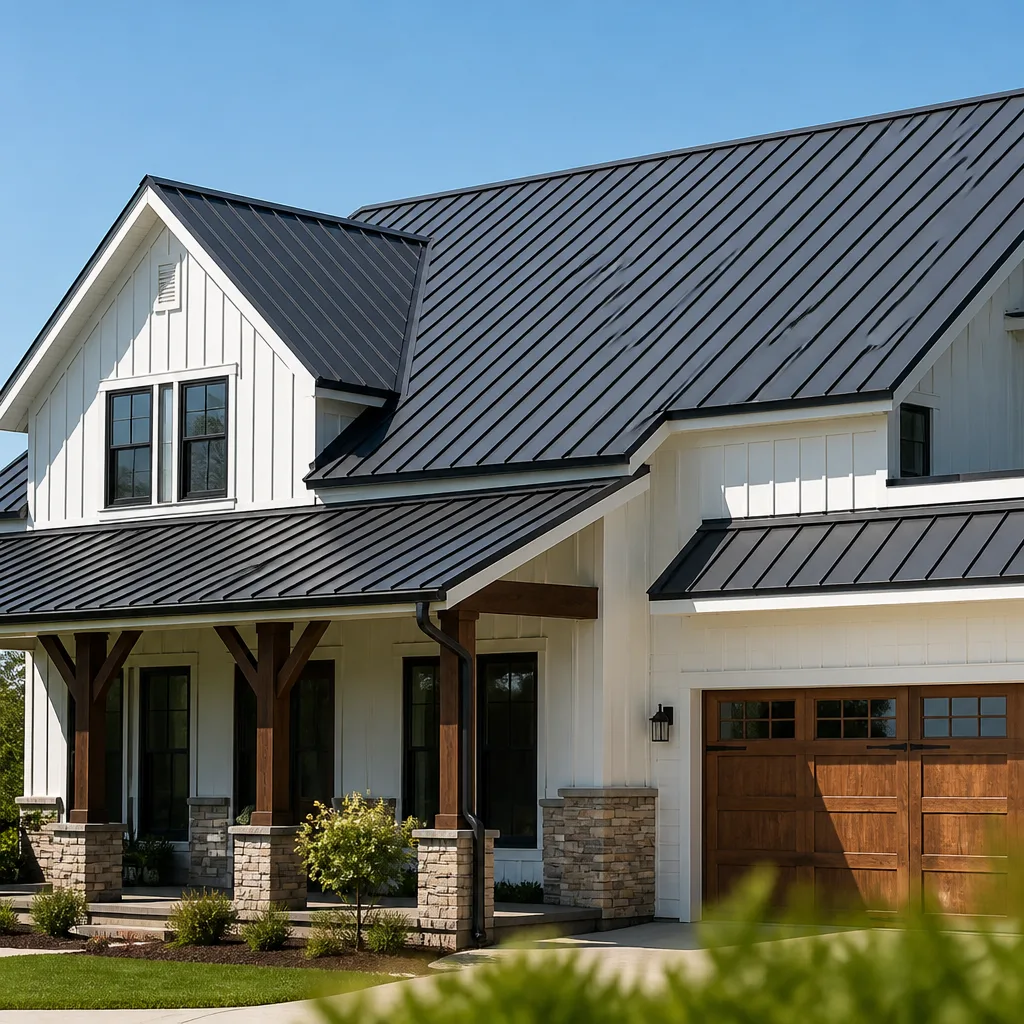 Metal roofing
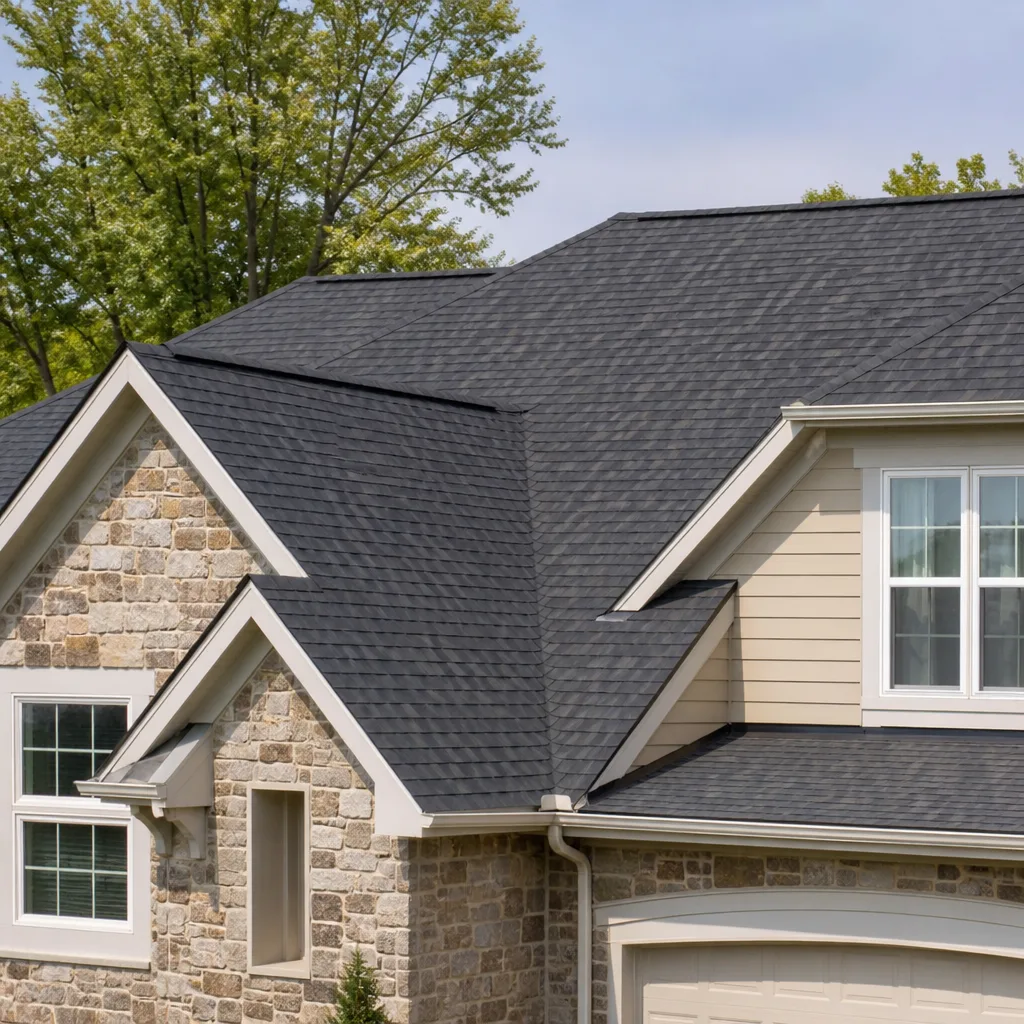
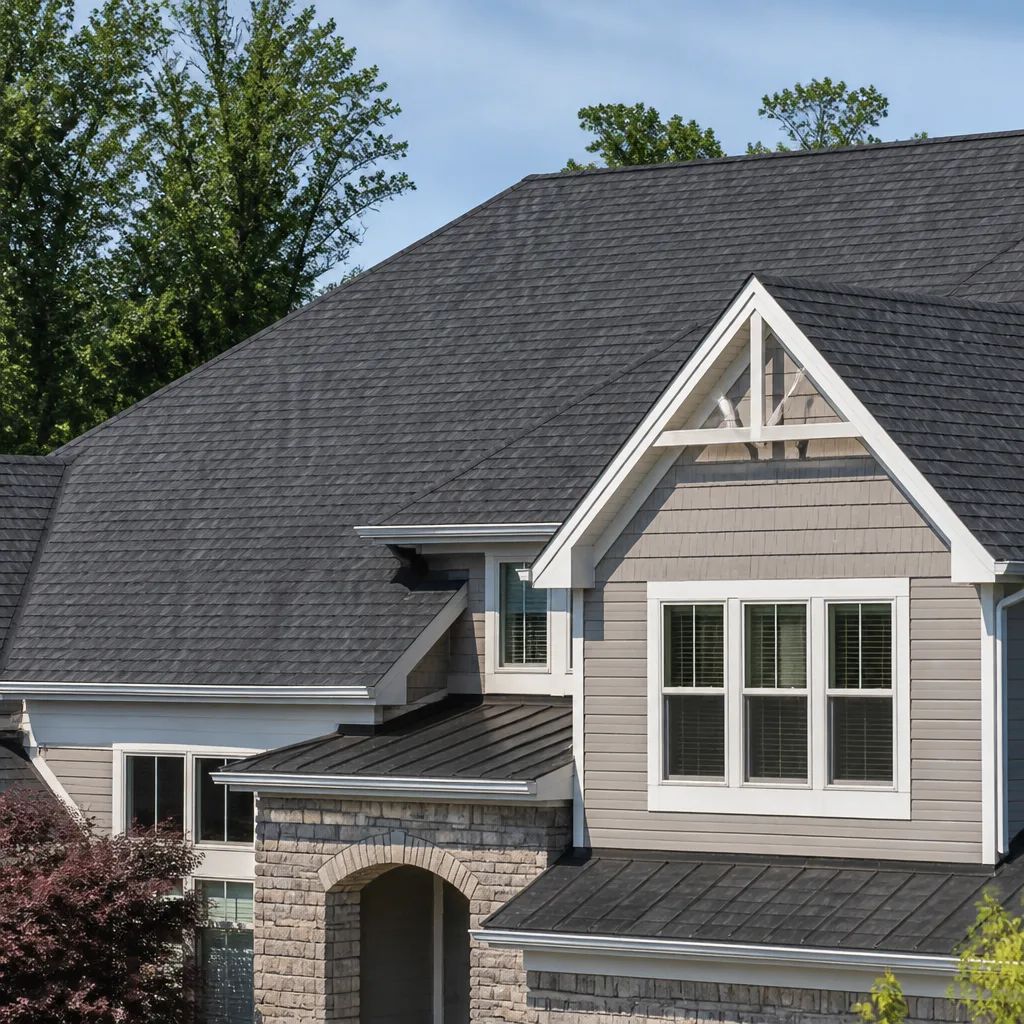 Architectural shingles
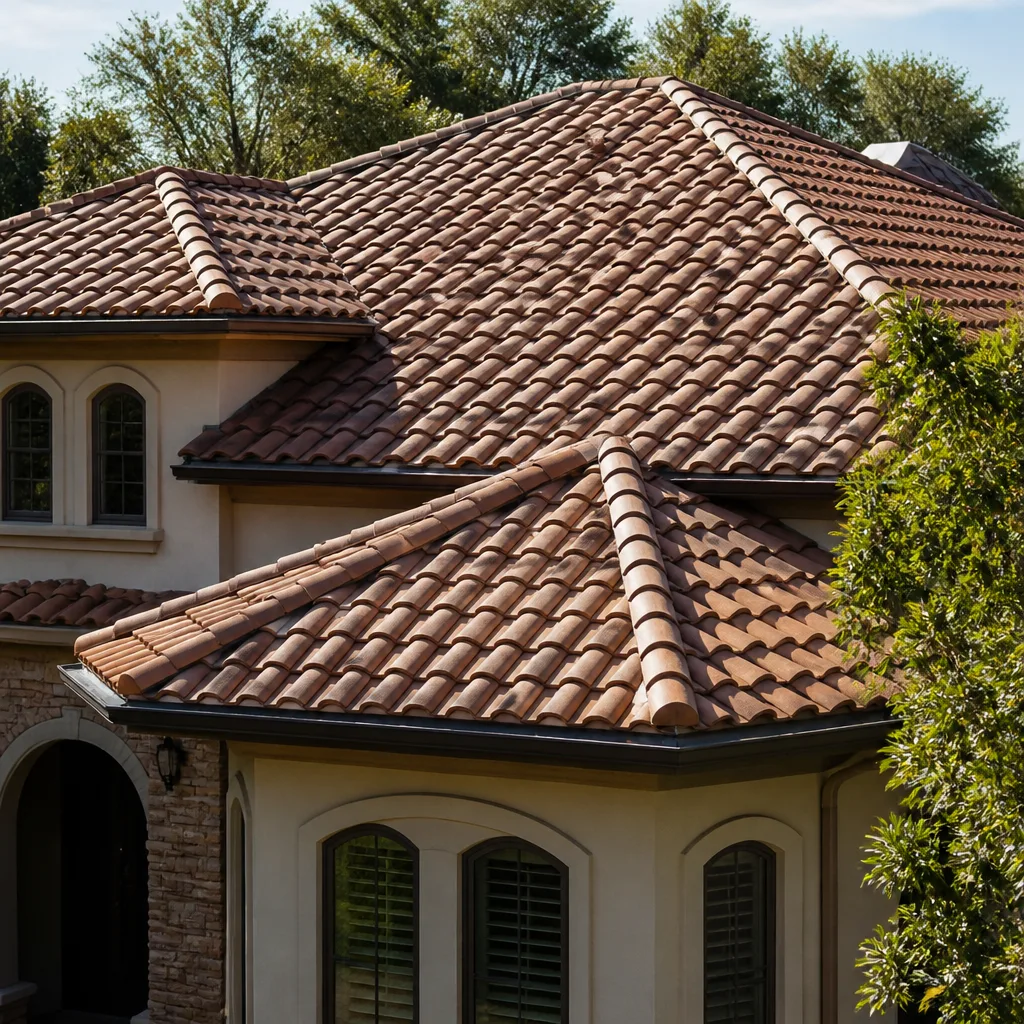 Tile roofing
 GAF
 Owens Corning
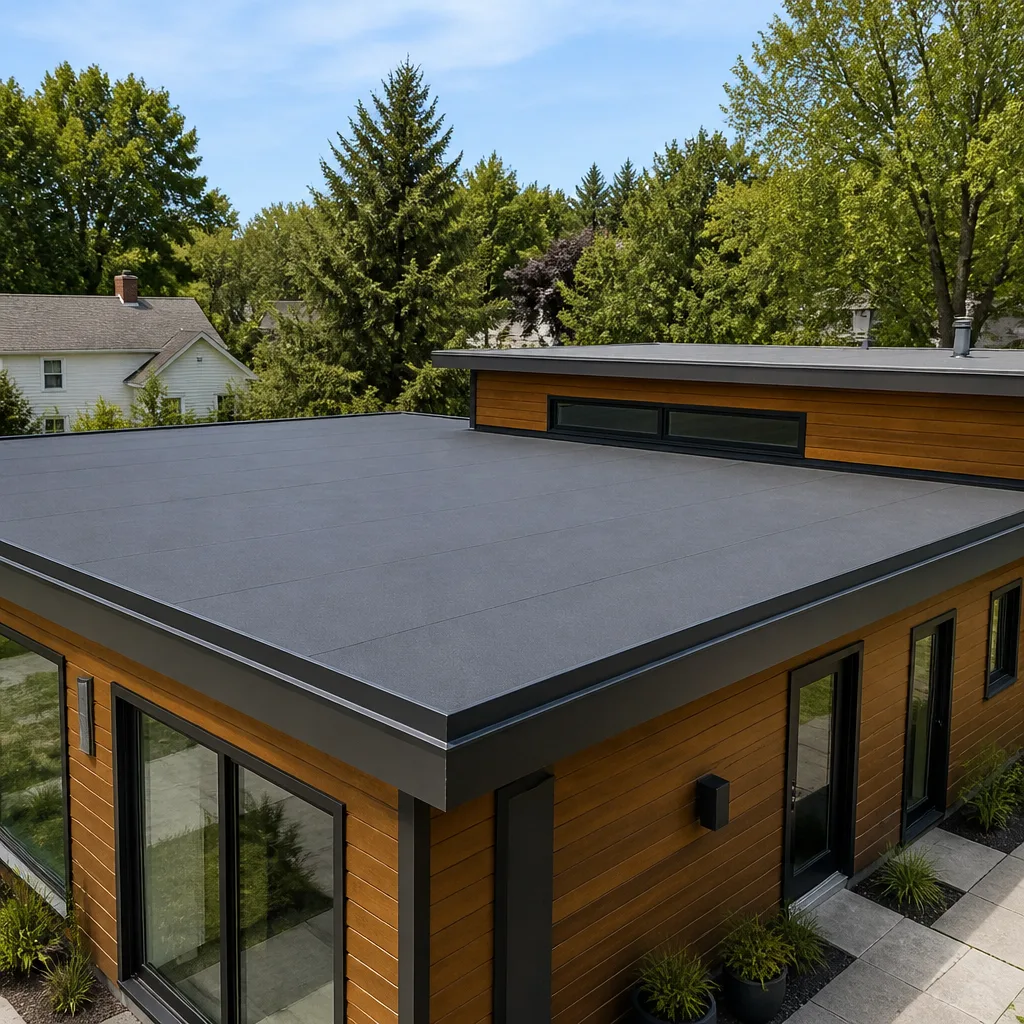 Flat & low-slope
Free roof inspection with deck photos before we talk money - GAF and Owens Corning certified installation
Seasonal Roofing Care for Sunnyvale: Year-Round Homeowner’s Guide
In Sunnyvale, the month that matters most for your roof isn’t January or July. It’s October – the narrow window between dry-season UV fatigue and the first significant rainfall. Most homeowners spend that month raking leaves and ignore the roof entirely, then discover in December that a shingle tab lifted in September and the underlayment has been drinking water for weeks. The usual advice to treat roofing care as four equal seasons is built for places with a real winter, and it wastes effort here. What Sunnyvale roofs actually face is a long, dry UV season followed by a short, intense rain season. This guide explains how to care for a roof across those two seasons, what UV really does to asphalt granules, the specific October and March tasks that matter, and how to tell honest wear from damage that needs a professional look.
Quick Answer
Seasonal roof care in Sunnyvale comes down to two seasons, not four: a dry season where UV and heat age the roofing materials, and a rain season that tests whatever the dry season left behind. The single most important month to act is October, when you clean the roof, check the flashing and seal small problems before rain arrives. The second is March, when you assess storm damage while it’s still visible. Everything else is routine.
Styles & brands we work with
- Architectural shingles
- Metal roofing
- Tile roofing
- GAF
- Owens Corning
- Flat & low-slope
Table of Contents
- Why Sunnyvale Roofs Have Two Seasons, Not Four
- What UV Stress Does to Asphalt Shingles Over a Dry Season
- October Checklist: The Window That Actually Matters
- March Assessment: Catching Storm Damage Before It Fades
- How Shade Trees Interact With Sunnyvale Roofs Year-Round
- When an Inspection Beats a Guess
- Choosing Materials That Hold Up to Sunnyvale Sun
- Common Mistakes to Avoid
- When to Call a Professional
- Frequently Asked Questions
Why Sunnyvale Roofs Have Two Seasons, Not Four
Most seasonal roofing guides are written for climates with a hard freeze and a long thaw. They tell you to clear snow, watch for ice dams, and check for frost damage. None of that applies in Sunnyvale. Our winters are mild. What we have instead is a long stretch of dry, sunny weather and a shorter rain season, and each one stresses the roof in a different way. That framing changes where you spend your effort.
In a four-season model, summer is the easy season and winter is the hard one. Here it’s the reverse. Summer is when the roofing materials take the most cumulative wear, and winter is when you find out whether they held up. Treating all four seasons equally leads to the same result every time: too little attention paid during the dry months, and a scramble in the fall when the first real storm is already in the forecast.
A two-season model is simpler and more honest.
- Dry season (roughly late spring through fall): UV, heat and sunlight do the work. Granules loosen, sealant strips soften and re-adhere, caulk shrinks. This is cumulative, slow damage that you can partially offset with a mid-season look.
- Rain season (late fall through early spring): water finds every gap the dry season opened. Flashing, valleys, penetrations and gutter edges are tested. This is where deferred maintenance becomes a leak.
The practical takeaway is to weight your maintenance effort toward the transition between the two – the fall window – and treat the spring as a damage assessment rather than a repair season. Everything else is a quick visual check. For a broader look at how our Sunnyvale Roofer team approaches the full lifecycle of inspection, repair and replacement, that structure follows the same logic: diagnose first, then fix only what needs fixing.
What UV Stress Does to Asphalt Shingles Over a Dry Season
An asphalt shingle is a fiberglass mat coated in asphalt and topped with mineral granules. The granules are the sacrificial layer – they take the sun so the asphalt underneath doesn’t. Over a long dry season, UV light and heat slowly break down the asphalt that holds those granules in place. When the bond weakens, granules come loose. That process is gentle month to month and obvious year to year.
The good news is that granule loss is visible and you can identify it before rain arrives. Here’s what to look for on an asphalt roof in Sunnyvale:
- Bare patches on sun-facing slopes. South- and west-facing planes take the most direct sun. If you can see the dark asphalt showing through where granules used to sit, the shingle is past its UV protection.
- Granules in the gutters. A healthy roof sheds some granules, especially a new one. A thick carpet of grit at the bottom of the gutter after a dry season means the shingles are actively shedding their protective layer.
- Shingle tabs that curl or cup at the edges. Heat cycling makes shingles lift and lie back down repeatedly. When the edges stop lying flat, the seal is broken and wind-driven rain can get under the tab.
- Sealant strips that no longer stick. Run a hand (from a ladder, never on the roof) along a lower course of shingles. If the tabs separate with almost no resistance, the adhesive strip has aged out.
- Faded or chalky appearance. A roof that looks washed out compared to a few years ago is telling you the surface is oxidizing faster than it can protect.
None of these require a repair on their own. They tell you the roof is aging and that the next rain season will test it harder than the last one. That’s exactly the information a roof repair decision should be based on. Granule loss near the end of a shingle’s service life is one thing. Granule loss on a roof that’s ten years old with consistent bare patches is a different conversation altogether, and one worth having with someone who isn’t trying to sell you a new roof before you’ve asked.
October Checklist: The Window That Actually Matters
October is when the numbers turn. The dry season has spent its heat, the first meaningful storms are usually weeks away, and there’s enough daylight and dry weather to actually work on a roof. This is the window most homeowners waste on leaf cleanup. If you do nothing else for your roof in Sunnyvale this year, do these tasks.
- Clear the gutters and downspouts. A dry season of leaf fall has filled most gutters by October. Water that backs up at the gutter line wicks under the drip edge and rots the fascia – one of the more common water-damage patterns we see on older homes.
- Trim overhanging branches back. Anything within a few feet of the roof surface deposits debris with every wind and keeps the shingles underneath shaded and damp. Cut it back before the rains make the branches heavier.
- Inspect the flashing at every penetration. Chimneys, vent pipes, skylights and wall-to-roof junctions all rely on flashing and sealant. Look for gaps, lifted metal, dried-out caulk lines and missing fasteners. Re-sealing small flashing gaps now is far cheaper than finding them through the ceiling in January.
- Check the valleys. A valley carries the largest volume of water on the roof. Debris collected there over the dry season traps moisture and hides corrosion on metal valleys. Clear it and look for standing water marks from the last rain.
- Look at the attic from inside. A quick pass with a flashlight in the attic shows staining, daylight at seams, or damp insulation – early signs a leak started months ago and just hasn’t been noticed.
- Photograph everything you find. A clear set of photos makes any later conversation with a roofer faster, and it shows you the change after the rain season.
That’s the whole list. It’s not complicated, and none of it requires getting on the roof if you’re not comfortable up there. A professional inspection in October is the honest way to know what state your roof is in before the rain season tests it. Our Sunnyvale team treats an inspection as a diagnostic service in its own right, not a hook for a replacement.
March Assessment: Catching Storm Damage Before It Fades
By March, the rain season has done its work. The roof has been through the tests, and whatever damage exists is fresh, visible and still easy to identify. The reason this matters is that dry-season patching is very effective at masking rain-season damage. A homeowner who waits until June to look at the roof sees a sun-baked surface with a few obvious problems, not the lifted flashing, missing shingle tabs and displaced ridge caps that were plain as day in March.
March is a walk-and-look exercise, not a repair window. Here’s how to do it:
- Look at the ground first. Walk the yard and find every shingle tab that came down during the storms. Count them and remember where they roughly landed – they tell you which slope is failing fastest.
- Check the ridge and hips. High-wind events tend to lift ridge caps before they lift field shingles. A lifted ridge cap is cheap to fix and expensive to leave.
- Inspect the areas the last October check flagged. Compare against your photos. If the sealant gap you noticed in October has become a wet spot in the attic, that’s the answer you needed.
- Rear downspouts and gutter ends. A blocked downspout during a storm pressurizes the gutter and pushes water back at the fascia. If a downspout came loose, check what it pulled away from.
- Walk the ceiling lines in every room after a storm. A slow leak often shows as a faint discoloration, not a drip. Look for it before the ceiling dries out and the ring fades.
One point worth being clear about: hail damage is uncommon in Sunnyvale. If a roofer tells you a recent storm left hail bruising on your shingles and you don’t remember hail, ask for evidence. What we do see is impact damage from falling branches, wind-lifted tabs and storm-driven water at failing flashing, and those are all actionable without a hail claim. Where a repair is what’s needed, that’s the conversation to have – this is the other half of what a roof replacement discussion usually skips over.
How Shade Trees Interact With Sunnyvale Roofs Year-Round
The older residential blocks in Sunnyvale were planted with mature shade trees, and those trees shape roof life in ways a low-shade yard never sees. Trees are usually framed as shade and comfort. On a roof, they’re a year-round stressor with two different effects per season, and most homeowners only ever notice one of them.
In the dry season, trees are mostly a debris problem. Leaf litter and seed pods collect in the valleys, gutters and any flat pocket on the roof. A thin layer of debris holds moisture against the shingle surface even in summer, keeps UV off that spot, and slowly degrades the sealant under it. It’s not dramatic, but a shaded roof never dries fully during the day and never gets a chance to reset.
In the rain season, the same trees get worse.
- Debris dams water. A blocked valley or gutter sends water sideways under shingles instead of down the roof.
- Damp shade fabric. Constant tree shade keeps the roof surface near-condensing overnight, and any surface moisture is an invitation for moss and algae in the shaded areas.
- Branches against the roof. A limb rubbing on shingles wears through granules and can open a gap without a visible break.
- Roots at the gutter line. Roots from trees planted near the foundation can find their way into the downspouts and push joints apart as they grow through. It’s the same behavior that cracks a sidewalk, just with more expensive consequences.
The practical answer is a routine: clear the roof and gutters after leaf drop, not before, and keep tree limbs at least a couple of feet off the roof surface. If you have heavy shade, an inspection in October is worth more on a shaded roof than on an unshaded one.
When an Inspection Beats a Guess
Most roofing problems present as small, ambiguous symptoms – a stain on the ceiling, a bit of grit in the gutter, a slightly raised shingle – and homeowners guess at the cause. Guessing is expensive, because the cheapest fix and the most expensive fix look identical from the ground. A proper inspection exists to replace the guess with a diagnosis, and that’s the whole reason it’s offered as a standalone service here rather than folded into a repair quote.
Reach for an inspection when:
- You’ve found ceiling staining but the roof looks intact from the ground.
- You’ve been in the home for years without a roof check and don’t have a baseline.
- The dry season has clearly aged the roof and you want an honest read on remaining life.
- You’ve had storm damage in March and want to know if it’s cosmetic or structural.
- You’re buying or selling a Sunnyvale home and need the roof condition documented.
A proper inspection is a physical check of the roof surface, flashing, penetrations, valleys, gutters and (from inside) the attic. It ends with a clear explanation of what’s wrong, what’s fine and what the options are. What it doesn’t end with is a pressure-sell for a full replacement you didn’t ask about. That’s the standard we work to.
Choosing Materials That Hold Up to Sunnyvale Sun
Material choice matters more here than it does in a cooler climate, because the roofing surface spends most of the year being baked. The right shingle for a Sunnyvale roof is the one that holds its granules and stays flexible through a hot, dry season without relying on frequent rain to cool it down. Two things drive that: the quality of the asphalt coating and the density of the granule layer.
We work with seven leading roofing brands so the material fits your home, not our supply order. On asphalt shingles that includes premium lines from CertainTeed and Owens Corning, which tend to hold their color and granules longer in a high-UV climate, and value-tier lines from IKO and Atlas that are a strong fit for budget-conscious replacements on homes that don’t need a premium product. Being able to compare across brands is the whole point: a single-brand contractor has one recommendation and it’s whatever they stock.
What to ask about any roofing material you’re considering:
- Granule adhesion in high UV. Ask the manufacturer’s documentation how the surface performs in a hot, sun-exposed climate specifically.
- Color and fade over ten years, not one. Dark shingles absorb more heat and age faster. A lighter color can lengthen roof life in a sunny climate at some cost to appearance.
- Underlayment. The shingles are the visible layer; the underlayment is the actual waterproof barrier. A premium shingle over cheap underlayment is a worse roof than the reverse.
- Ventilation balance. A hot roof with poor attic ventilation bakes from underneath as well as above. Intake and exhaust have to be balanced, not just present.
- Warranty eligibility. Manufacturer warranties vary by product line and installation standard. Ask specifically what’s covered and whether the installer’s work qualifies – the paperwork is worth less than the answer.
None of these questions require a favorite material. They require an honest installer who can tell you which one fits your roof. If you want to talk through material options for your home, that’s a free estimate conversation, not a sales appointment.
Common Mistakes to Avoid
- Treating seasonal maintenance as four equal quarters. In Sunnyvale the effort belongs in October and March, and a homeowner who half-does all four seasons ends up under-prepared for the one that matters. Skip January and July tasks and put the time into the fall window.
- Clearing gutters in the wrong month. Clearing gutters in spring feels productive and does almost nothing; by October they’re full again. Clear after leaf drop, before the rains.
- Sealing over a problem you haven’t diagnosed. Caulk and sealant are quick fixes, not answers. Sealing a valley whose underlying issue is debris accumulation traps the moisture rather than removing it.
- Skipping a spring check because fall was fine. A roof that passed October can still fail in a single storm. The March assessment is how you catch it before dry-season patching hides it.
- Calling only after a leak is visible inside. By the time water reaches the ceiling, the underlying problem has been working for weeks or months. Interior staining is the end of the timeline, not the start.
- Letting one roofer limit your options. A single-brand installer will recommend their brand. That’s not dishonesty; it’s what they have. If you don’t have a material comparison, you haven’t really priced the job.
- Assuming trees only matter in the dry season. The rain season is when tree debris becomes a water-management problem. Same trees, different risk.
When to Call a Professional
Some roof tasks are household chores: clearing gutters, trimming overhanging branches, and checking for interior stains. Others belong to a trained professional and shouldn’t be attempted from a ladder you haven’t inspected in a decade. Call a professional when you find lifted shingles you can see from the ground, when flashing is visibly separated, when there’s staining on a ceiling, or when the roof is beyond a walkable age. Don’t go onto a roof to inspect a leak – a slip on a wet roof in March is a worse problem than a slow leak, and the actual diagnosis needs someone who can read the surface.
Sunnyvale Roofer offers free estimates in Sunnyvale – call (833) 349-3199. We answer 24/7. Fast dispatch from 7am to 7pm, Sunday through Friday. We work with seven leading roofing brands and offer inspection, repair and replacement as three separate services, so the first conversation is a diagnosis, not a replacement quote.
Frequently Asked Questions
October. It’s the window between the end of the dry season, when UV has aged the roofing materials, and the arrival of the first significant rain, when every gap gets tested. The key tasks are clearing gutters after leaf drop, trimming branches off the roof, and sealing failing flashing before the rain arrives. If you do nothing else this year, do the October checklist.
A routine inspection once a year, ideally in October, is the right baseline for most roofs. Add a second look in March to catch storm damage while it’s fresh, and get an inspection any time you see ceiling staining, bare granule patches or lifted shingles. If the roof is older or heavily shaded, a yearly inspection matters more.
Yes, and UV is the primary aging factor here. Sunnyvale’s long dry season means shingles spend most of the year exposed to direct sun. The damage shows as granule loss, curling tabs, sealant that no longer sticks and a faded surface. It’s cumulative and slow, which is why an annual October inspection catches it before it becomes a leak.
Hail is uncommon in Sunnyvale. The storm damage we see is more likely to be wind-lifted shingle tabs, displaced ridge caps, water at failing flashing and impact from falling branches. If a contractor claims hail damage after a storm you don’t remember, ask for photos of the shingle surface, not a verbal estimate.
Start on the ground. Walk the yard and count shingle tabs that came down, then check the ridge caps and any flashing that was flagged in October. Photograph what you find and compare against your October photos. If anything has changed, that’s the point at which an inspection is worth scheduling rather than waiting for the next dry season.
That depends on age and extent. A localized fix – a few lifted tabs, a re-sealed flashing joint, a cleared valley – is usually worth doing and holds well. A roof that’s near the end of its service life with widespread granule loss is a different decision. The honest answer only comes from an inspection, and a proper inspection should give you both a repair view and a replacement view so you can choose. Call (833) 349-3199 for a free estimate. We answer 24/7.
The Bottom Line
Sunnyvale’s climate isn’t gentle on a roof; it’s just doing the damage in a different pattern than the four-season template assumes. UV does the slow work across the dry season, water finds the result in the rain season, and the two bookend months – October and March – are where a homeowner’s effort actually changes the outcome. Clear and seal in the fall, assess in the spring, keep the trees back from the roof, and know the signs of granule loss well enough to read them. When the roof is beyond what maintenance can protect, a proper inspection gives you the diagnosis you need to decide between repair and replacement without guessing. That’s our approach: repair when repair makes sense, replace only when it’s time.
Written by the team at Sunnyvale Roofer.
See the difference
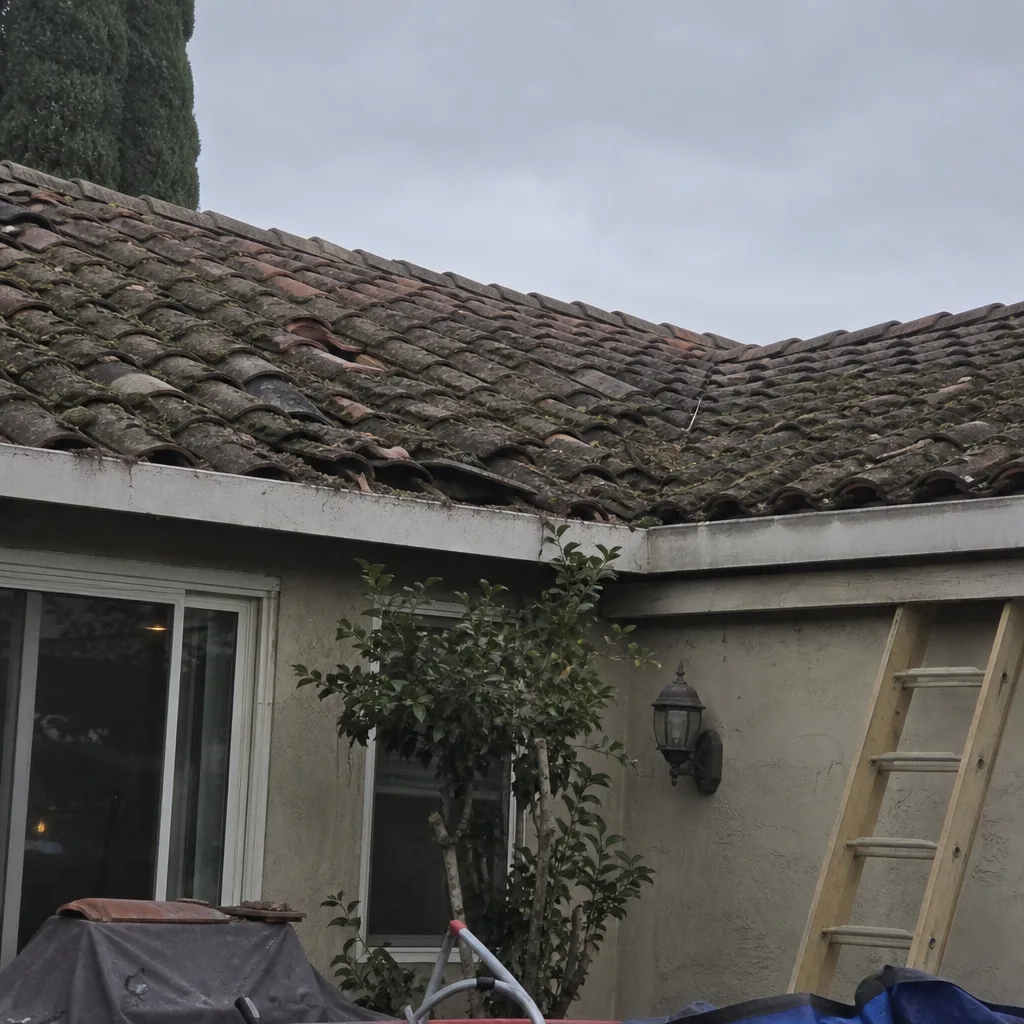 Before
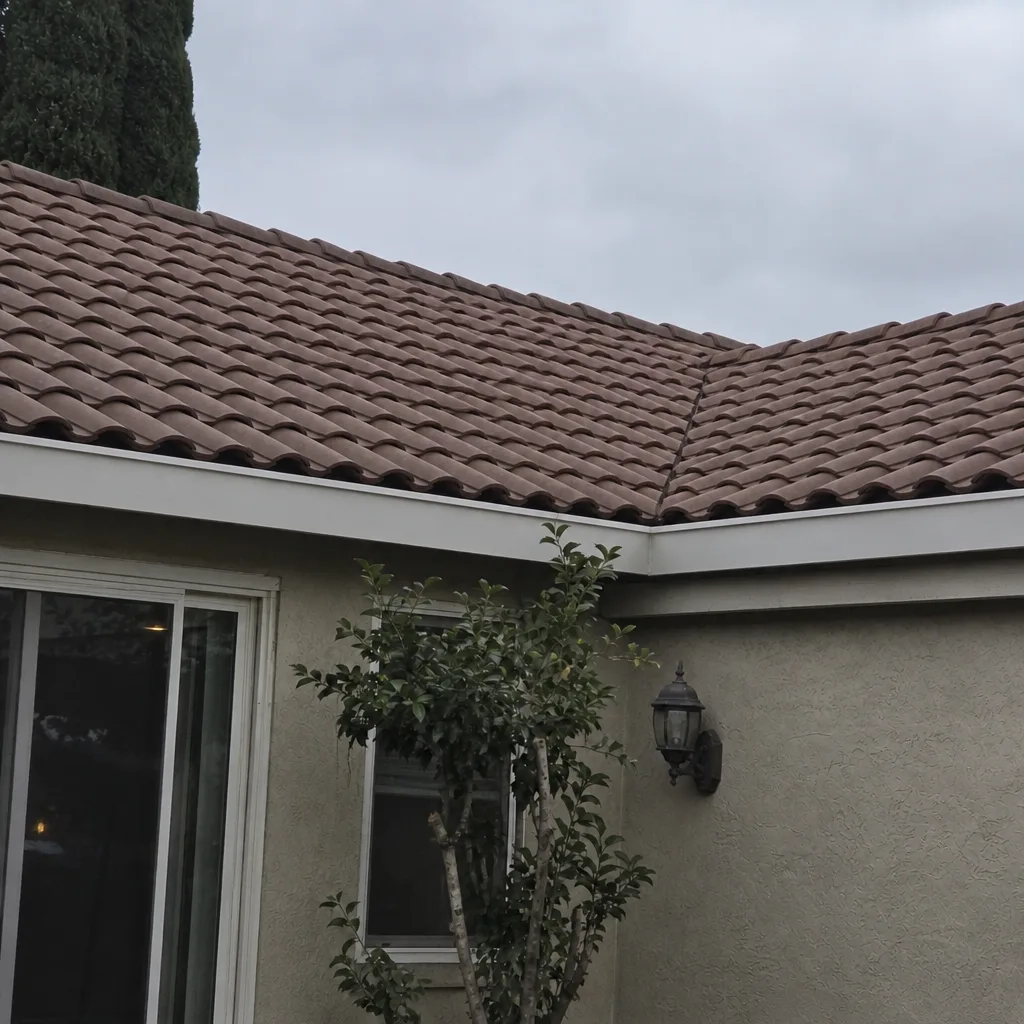 After
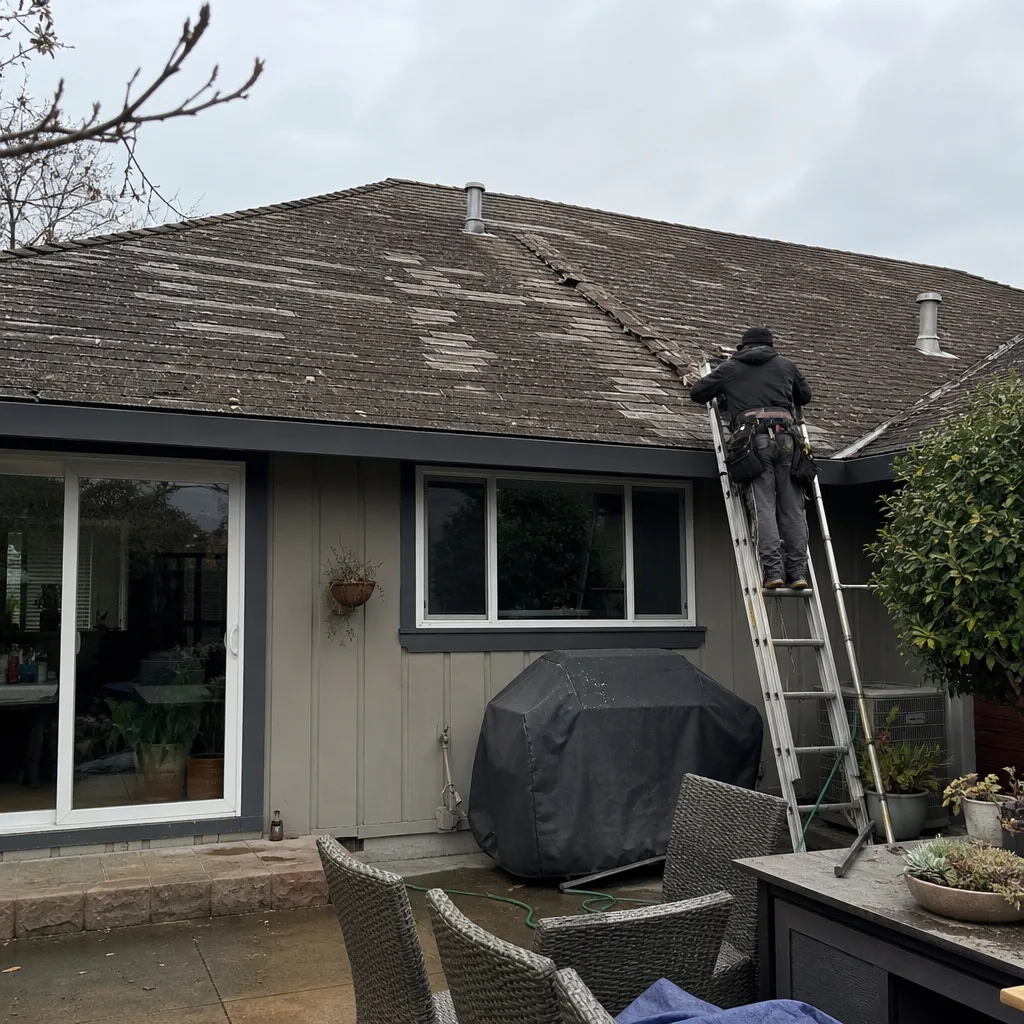 Before
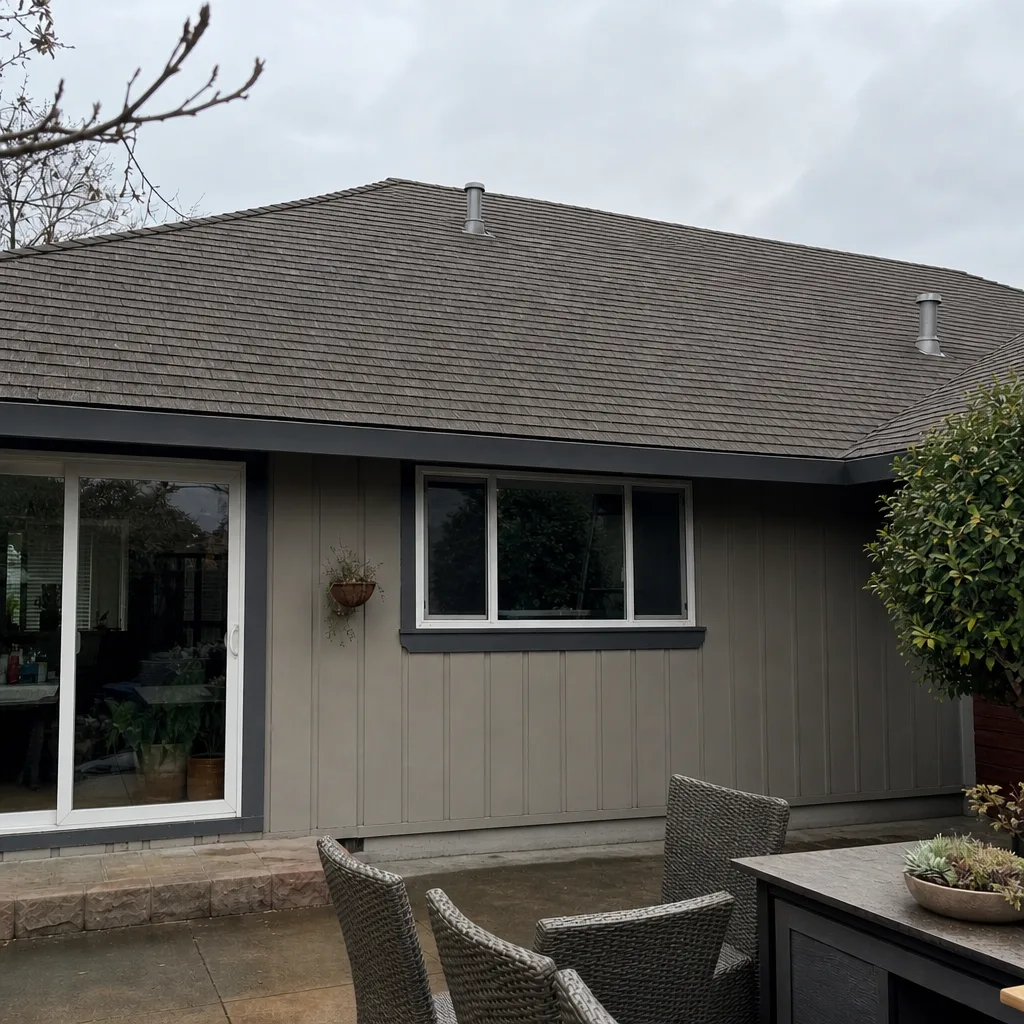 After
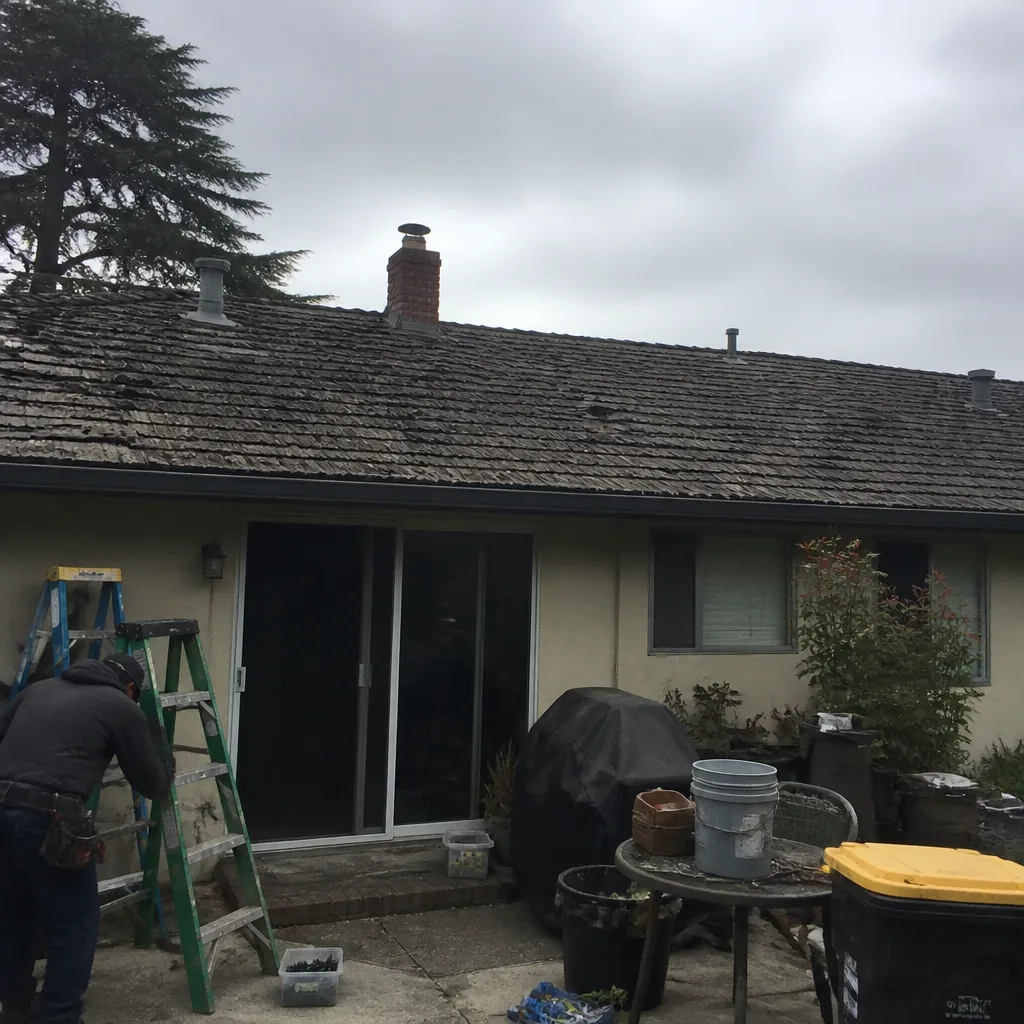 Before
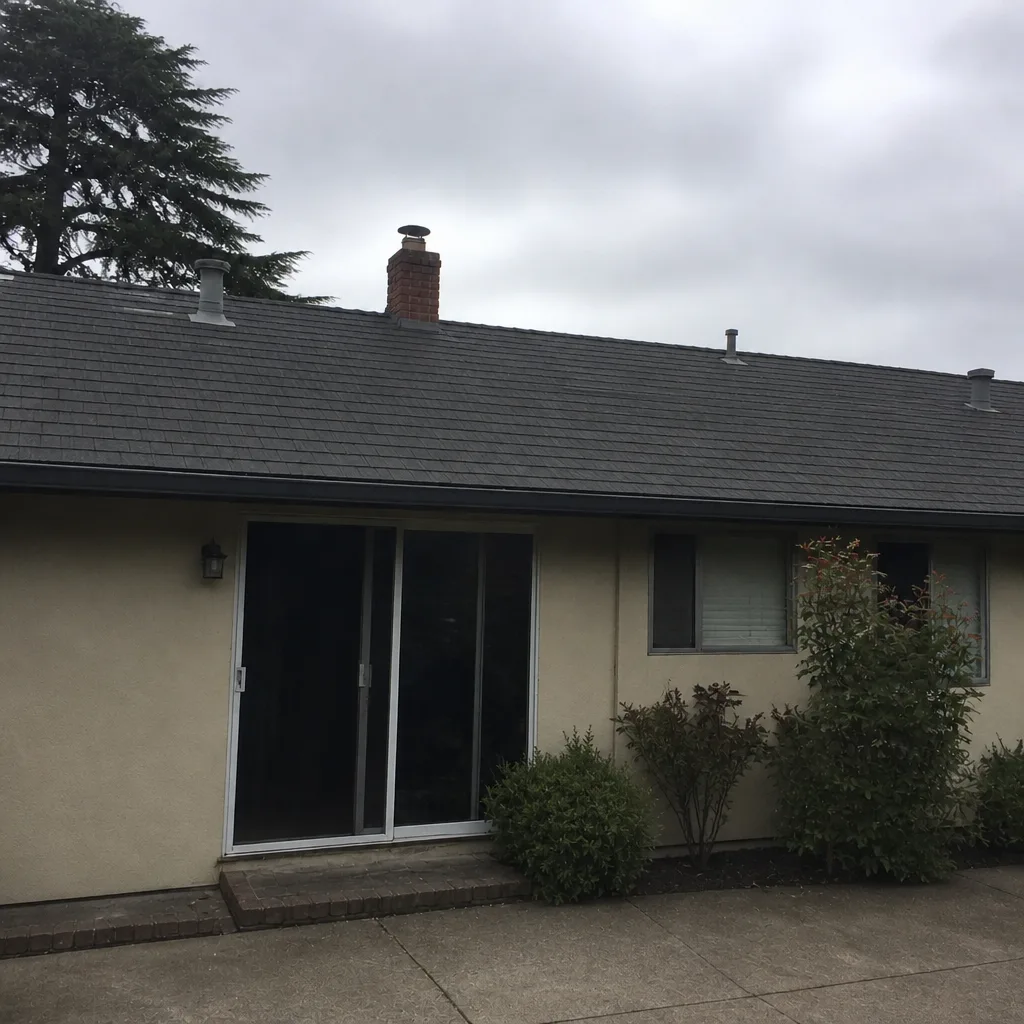 After