
Last updated November 15, 2026
 Architectural shingles
 Metal roofing
 Tile roofing
 GAF
 Owens Corning
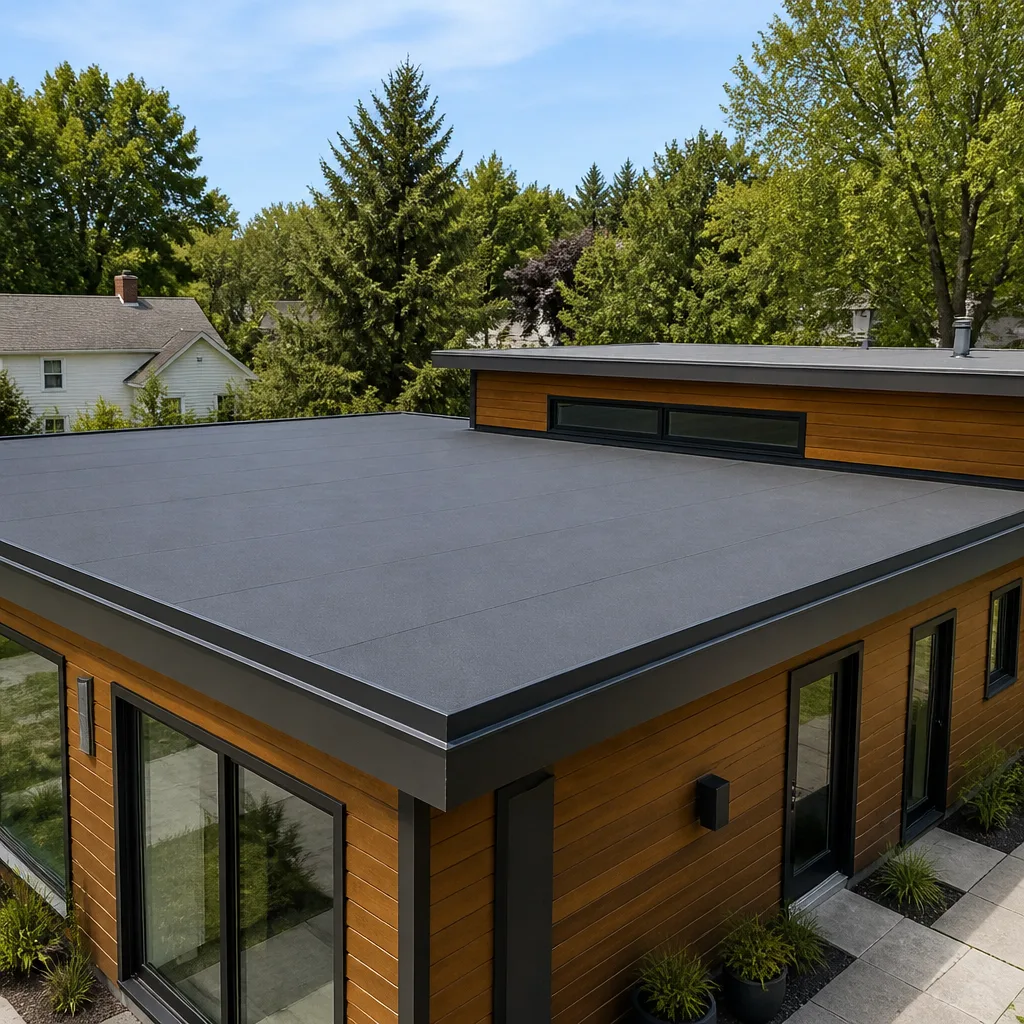 Flat & low-slope
Free roof inspection with deck photos before we talk money - GAF and Owens Corning certified installation
Roof Repair Maintenance Checklist for Sunnyvale Homeowners
Here’s the counterintuitive part: most of the roof damage we see in Sunnyvale doesn’t get caused by the storm. It gets revealed by it. The first real rain of the season finds the flashing that’s been quietly failing under a clear October sky, and that’s when the phone starts ringing. A roof doesn’t fail because of one bad day of weather; it fails because a small, cheap-to-fix weakness got eight dry months to quietly get worse. This guide exists to break that cycle. We’ve sequenced a maintenance checklist by what actually fails first and what it costs when it fails – not by which month looks good on a calendar. By the end, you’ll know what to check from the ground, what to leave to a professional, and exactly when a minor task becomes a call today.
Quick Answer
The most effective roof maintenance checklist for a Sunnyvale homeowner ranks tasks by failure risk, not by season. Flashing and roof penetrations should be checked first, valleys and gutters next, field shingles and surface conditions last. In a climate where most of the year’s rain falls in a short wet season, getting this sequence done before the first storm matters far more than doing a longer list at a convenient time. A professional roof inspection captures what you can’t safely see from the ground.
Styles & brands we work with
- Architectural shingles
- Metal roofing
- Tile roofing
- GAF
- Owens Corning
- Flat & low-slope
Table of Contents
- Why Sequence Matters More Than Seasons in Sunnyvale
- Priority One: Flashing and Penetrations
- Priority Two: Valleys and Gutters
- Inspecting Low-Slope Roofs on Mid-Century Sunnyvale Ranch Homes
- What You Can Document From the Ground vs. What Needs a Pro
- Priority Three: Field Shingles and Surface Conditions
- The Repair-or-Wait Decision Framework
- How Material Choice Fits Into Your Maintenance Plan
Why Sequence Matters More Than Seasons in Sunnyvale
Most maintenance guides assume a four-season climate with repeated wet-dry cycles that give you chances to catch a problem. Sunnyvale doesn’t work that way. Rainfall here is concentrated into a compressed wet season, which means the roof gets very little gradual exposure and one very real test. The dry months don’t damage much, but they also don’t reveal much. Weak flashing that would slowly drip in a wetter climate stays completely dry from spring through fall, then makes itself known all at once in the first heavy storm.
That compression changes how you should think about maintenance. The window for meaningful fall preparation is narrow, and if you spend it on cosmetic checks – tidy gutters, a visual scan of the shingles – you may miss the two or three items that actually let water in. So we sequence by consequence. A failed piece of flashing around a vent or a chimney is where the majority of interior water damage starts, and it fails silently. A few lifted or worn shingles in the middle of a roof slope are usually a slower problem. Checking the fast-failing, hard-to-see items first means a short wet season can’t turn a small weakness into a stained ceiling and soggy insulation.
This is why we push a diagnostic-first approach. Our Sunnyvale Roofer team treats inspection as its own service tier, not a sales appointment bolted onto a replacement quote. Understanding where your roof is actually vulnerable – before the first rain – is what lets you schedule a repair on your terms instead of reacting to one.
What Gets Checked First and Why
- Flashing and penetrations: Highest failure risk because the seams and joints around vents, chimneys, and skylights are where water finds the smallest path in, and they degrade quietly.
- Valleys and gutters: Water concentrates here by design. A clogged valley or backed-up gutter pushes water under shingle edges and into the fascia.
- Low-slope sections: Flatter areas drain slowly and hold moisture longer, so seams and ponding become a real concern.
- Field shingles: Important, but usually a slower form of failure – worth checking, not worth checking before the flashing.
A homeowner who does a thorough shingle scan but never looks at the flashing has done the wrong work first. When we help Sunnyvale homeowners prepare for the wet season, the order is always the same: seal the paths water takes in, then worry about the surface.
Priority One: Flashing and Penetrations
Flashing is the metal – and sometimes flexible – material that seals the joints where your roof meets something else: a chimney, a vent pipe, a skylight, a wall, or a change in roof pitch. It’s the part of the roof most responsible for leaks, and it’s also the part homeowners inspect least, because it’s small and often hard to see. If we could only check one thing on your roof before the wet season, it would be this.
The failure mode is predictable. Sealant dries out and cracks. Metal lifts slightly at a seam. The neoprene boot around a plumbing vent gets brittle and splits. None of this leaks in dry weather, so nothing warns you. Then the first serious rain soaks the area behind the flashing, works under the shingle edge, and by the time you see a water stain on the ceiling, the moisture has been traveling for a while. In our experience, this is the single most common cause of the post-storm repair calls we get in Sunnyvale – not wind-torn shingles, but flashing that was quietly failing all summer.
What to Check on Your Flashing
- Chimney flashing: Look at the base of the chimney where it meets the roof. Check for lifted metal, visibly cracked sealant, or rust. This is the highest-consequence check on the list.
- Vent pipe boots: These are the small rubber-and-metal collars around plumbing vents. If the rubber looks cracked or the collar looks loose, it’s a likely leak point.
- Skylight seals: Check the frame perimeter for gaps and the glass or panel for cracks or condensation inside the unit.
- Wall and pitch transitions: Where the roof meets a vertical wall or changes pitch, the flashing and counter-flashing need a close look. These seams fail slowly and are easy to overlook.
- Valley flashing: If you can see the metal in a valley without getting on the roof, check that it isn’t rusted through or separated from the shingle edges.
The Safety Caveat
Here’s where we’d stop you. Flashing checks sound simple, and on paper they are, but they require getting up close to the roof edge, stepping onto a low-slope surface, or leaning around a chimney – and the roofs where flashing fails most are exactly the ones that are steep, old, or slippery after morning dew. Roof falls are a real and serious hazard, and most aren’t caused by a dramatic misstep, but by a quick “I’ll just take a look” moment on a surface the homeowner wasn’t trained to read. This is one item we genuinely recommend leaving to a professional. A trained technician can get to your flashing safely, photograph what they find, and tell you plainly what needs attention.
Priority Two: Valleys and Gutters
Roof valleys are the V-shaped channels where two roof planes meet. They’re designed to collect and route the largest volume of water on the entire roof, which means they take the brunt of the wet season. Gutters catch what the valleys release. When either one backs up, water doesn’t disappear – it gets forced sideways, under shingle edges, into the fascia board, and often into the structure behind it. In Sunnyvale, the failure window is tight: a wet season that delivers most of the year’s rain in a few months means a clogged gutter gets tested hard, fast, and repeatedly.
Gutter maintenance matters more here than homeowners expect, partly because of what Sunnyvale’s trees deposit. Deciduous debris from surrounding gardens and street trees accumulates over the dry months and sits in the gutters until rain turns it into a dam. By the time the wet season starts, the debris load is at its peak. Cleaning gutters in the fall – before the first real storm – is more useful than cleaning them once in spring, because the spring cleaning clears last year’s accumulation while the fall cleaning clears the buildup that’s about to cause a problem.
What to Check on Valleys and Gutters
- Gutter flow: After a moderate rain, watch the downspouts. Water should exit briskly, not dribble or overflow at the roofline.
- Downspout discharge: Downspouts should carry water well away from the foundation. If water pools near the house, that’s a drainage problem worth fixing.
- Valley debris: Fallen leaves and grit collect in valleys and hold moisture. A clogged valley can trap water against the shingles.
- Gutter attachment: Look for gutters that are sagging, pulling away from the fascia, or holding standing water. Standing water in a gutter is a sign it’s out of alignment.
- Fascia and soffit: From the ground, check for paint peeling, sagging, or visible rotten wood at the edge of the roof – signs water has been getting where it shouldn’t.
- Water stains on the underside of eaves: A streak running down from the roofline at a valley is worth a closer look.
Cleaning gutters from a ladder is one of the few checks you can reasonably do yourself, provided the ladder is stable and you keep off the roof itself. But if your gutters are choked with debris and the fall rain is already here, don’t wait until next year. This is a task where getting ahead of the first storm is the entire value.
Inspecting Low-Slope Roofs on Mid-Century Sunnyvale Ranch Homes
Sunnyvale has a lot of mid-century ranch homes, and many of them carry low-slope or flat roof sections – over an addition, a carport, a garage, or a porch. These roofs behave differently from pitched residential roofs, and they need a different checklist. On a pitched roof, gravity and steepness shed water quickly; low-slope sections drain more slowly and typically rely on a membrane surface with seams. When that surface wears, or when seams open, water doesn’t run off – it sits.
The first thing to understand about a low-slope roof is the roof drain or scupper configuration. These rely on a shorter, flatter drainage path, so a debris clog creates pooling rather than a quick runoff. Ponding water – water that stays more than a couple of days after the rain stops – is the telltale sign that a low-slope section isn’t draining. It puts steady pressure on the seams and eventually finds a way through. In our experience, a mid-century low-slope section that gets checked twice a year (once before the wet season, once after) is far less likely to spring a surprise.
Low-Slope vs. Pitched: The Checklist Differences
- Seams: Low-slope membranes have seams that can lift or separate. On a pitched roof, the equivalent check is the shingle interlocks.
- Ponding: Low-slope roofs need to be watched for standing water after rain. Pitched roofs shed water too fast to pool, so this check doesn’t apply.
- Drains and scuppers: Low-slope sections gather debris at their drains. Clear them before the wet season.
- Surface texture: Membranes and rolled roofing can blister, crack, or lose their surfacing. Pitched roofs show wear as granule loss and lifted shingles instead.
- Traffic paths: Low-slope sections are often walked on for maintenance. The worn path is usually where the surface fails first.
Because a low-slope section is often smaller and near a wall or edge, homeowners are tempted to walk it themselves. That’s the wrong instinct. A membrane surface can look solid and still be slippery or soft, and a fall from a low roof is no less serious than a fall from a high one. We recommend a professional inspection for any low-slope roof, especially one over a mid-century addition where the joist structure underneath isn’t visible. If you’re not sure whether your Sunnyvale home has a low-slope section worth checking, a professional can tell you in one visit.
What You Can Document From the Ground vs. What Needs a Pro
A big part of a useful maintenance habit is knowing which checks are genuinely yours and which need a trained eye at close range. Homeowners who try to do everything often skip the safe ground checks out of frustration, or take risks they shouldn’t. Here’s a simple split that covers the realistic work.
Safe to Document From the Ground
- Visible sagging or unevenness in the roofline.
- Gutters pulling away from the fascia, or visibly full of debris.
- Water stains on ceilings, walls, or the underside of eaves.
- Missing, curling, or discolored shingles at the lower edges you can see.
- Downspout discharge behavior during rain.
- Lifted or damaged flashing you can see clearly from a stable, low vantage point.
- Interior signs: cracked paint at wall-ceiling joints, musty smells, daylight through the attic boards.
Leave to a Professional
- Any check that requires walking on the roof surface.
- Close inspection of chimney flashing, skylight frames, and vent boots.
- Valley and low-slope membrane details.
- Anything over a steep or low-slope section, or after rain or morning dew when surfaces are slick.
- Attic-side assessment of decking, sheathing, and insulation moisture.
- Confirming whether a problem is cosmetic or structural.
Documenting from the ground is genuinely useful: a dated photo of the same gutter every fall, for example, tells you a lot about drift over time. But the minute a check requires you to get above the gutter line or onto the roof, that’s a pro’s job. Our technicians have up to 9 years of experience, and they’d rather inspect your roof than treat an avoidable fall.
Priority Three: Field Shingles and Surface Conditions
Field shingles are the ones covering the broad, open areas of the roof. They’re the most visible part of the system, which is exactly why homeowners check them first – and why they get over-checked. Important, yes. But on a properly installed roof, field shingles are usually the last to fail, and their failure is more gradual than a flashing seam opening up. When you do turn to the field, you’re looking for a handful of specific signals.
Shingle Surface Checklist
- Granule loss: New asphalt shingles have a granular surface. Bald patches or granules collecting in gutters are a sign of age or wear.
- Curling and lifting: Shingle edges that curl up at the bottom or lift at the top are vulnerable to wind and to water getting underneath.
- Missing shingles: A clearly missing shingle is a direct pathway for water. This is worth fixing promptly, especially before the wet season.
- Discoloration and streaking: Dark streaks can indicate algae or moisture retention. Aesthetic in most cases, but worth noting over time.
- Cracking: Hairline cracks in the shingle surface can widen with heat and stress.
- Moss or organic growth: Growth holds moisture against the shingle surface, which shortens its life.
None of these mean you need a new roof on the spot. They tell you where your roof is in its life and what to watch. That’s the diagnostic-first framing we use: surface conditions inform the decision, they don’t make it by themselves. A well-landscaped, sunny-side exposure can show granule loss while still having years of life left. Getting the surface profile right, along with the flashing and valley checks, gives you a full picture rather than a partial one.
When roofing work does come up – whether it’s a targeted roof repair or planning ahead for a roof replacement – the state of your field shingles is one of the factors that shapes the recommendation. A trained assessment tells you whether the surface wear is cosmetic or approaching the point where a repair no longer makes economic sense.
The Repair-or-Wait Decision Framework
The hardest part of a maintenance checklist is the decision it forces: is this a “schedule it for later this month” problem or a “call today” problem? Here’s the framework we use. It splits typical findings into three tiers so you can act with confidence instead of dread.
Call Today
- Active water coming in – a stain that’s growing, a dripping ceiling, or visible moisture in the attic.
- Missing shingles or flashing lifted enough that rain will clearly get under it before the next storm.
- Any sagging in the roof deck – a low spot or soft area in the roofline.
- Daylight visible through the roof boards from the attic.
- A gutter or valley that’s actively backing water against the structure.
Schedule This Month
- Flashing that looks cracked or dried out but no leak yet.
- A vent boot that’s brittle or a skylight seal that’s aged.
- Shingles that are curling or lifting in a limited area.
- A clogged valley or gutter that’s still flowing, though slowly.
- Ponding water on a low-slope section that drains within a day.
Note and Monitor
- Granule loss in gutters with no other signs.
- Light surface streaking or algae.
- Localized moss.
- Shingles at the lower end of their useful life but still intact.
The line between tiers is the presence of active water. No water yet means you have time to schedule a proper assessment. Water coming in means the problem has already found its path and will use it again. If a storm has just passed and you’re not sure which tier your roof falls into, the safest call is an inspection – a professional assessment is the cheapest way to convert “I think it’s fine” into “I know what this needs.”
How Material Choice Fits Into Your Maintenance Plan
Maintenance doesn’t exist in a vacuum. The materials on your roof shape what you’ll be checking and how often. A strong maintenance habit on a well-chosen system buys more years between repairs; the same habit on an aging, mismatched roof has less to work with. This is why we recommend a materials conversation as part of any long-term plan, not just when a replacement comes up.
We work with seven leading roofing brands – GAF, CertainTeed, Owens Corning, IKO, Atlas, Tamko, and Boral – which means our recommendation is driven by your roof’s needs and your budget, not by what happens to be on a supply order. That matters for maintenance because asphalt shingles from different lines have different lifespans and different wear patterns; a premium line can justify longer intervals between attention, while a value line means staying a little more diligent about the surface checks. Matching the material to the exposure, the roof shape, and the goal is the difference between a roof that ages gracefully and one that keeps you on the phone.
What Material Choice Changes For a Sunnyvale Home
- Pitched roofs: Shingle selection from a premium line like GAF or CertainTeed can mean a longer expected life, which shifts the maintenance rhythm from frequent repairs toward occasional monitoring.
- Low-slope sections: Membrane selection matters more than shingle choice, and so does close attention to seams. A value material may still be right here – matched to the section and exposure rather than the marketing.
- Mixed-roof homes: Many Sunnyvale homes have more than one roof type. A single material strategy often doesn’t fit the whole house, and the maintenance plan needs to match each section.
- Warranty paperwork: Keeping documentation for brand and product line helps at maintenance and claim time, and careful records make any warranty conversation easier. Confirm eligibility and tiers with the manufacturer’s current documentation.
For a full look at how the right material pairing plays out on a Sunnyvale home, our Sunnyvale service page covers the local patterns we see. The takeaway for this checklist is simpler: know what’s on your roof and what it needs from you.
Common Mistakes to Avoid
- Doing the flashy work first. Shingle checks look satisfying and flashing checks don’t. But checking the field shingles before the flashing means you’ve inspected the wrong part of the roof, and the item most likely to leak goes unnoticed.
- Waiting for a leak to prove a problem exists. By the time water is visible inside, the weakness has usually been there through a dry season. Paying attention to cracking sealant and aged flashing catches the issue while it’s still a small repair.
- Ignoring gutters in the fall. In Sunnyvale’s climate, the fall gutter clean is the one that matters. A spring clean clears old buildup; a fall clean clears what’s about to be tested.
- Walking a low-slope or steep roof to “just take a look.” A membrane can look solid and still be soft or slick, and the morning dew on any roof is more dangerous than it appears. Document from the ground and leave the walking to a trained professional.
- Treating a single missing shingle as harmless. One missing shingle is a direct opening for water, and the first serious rain will find it. It’s usually a small, quick repair when caught early.
- Assuming cosmetic streaking means a new roof. Surface discoloration and even some granule loss are often cosmetic or age indicators, not a replacement verdict. A proper assessment separates wear from failure.
- Patching a leak without finding the source. A sealant patch over a stain of unknown origin may hold for a season and then fail with the underlying problem still there. Flashing failures often originate upslope from where the stain appears, so the diagnosis matters as much as the repair.
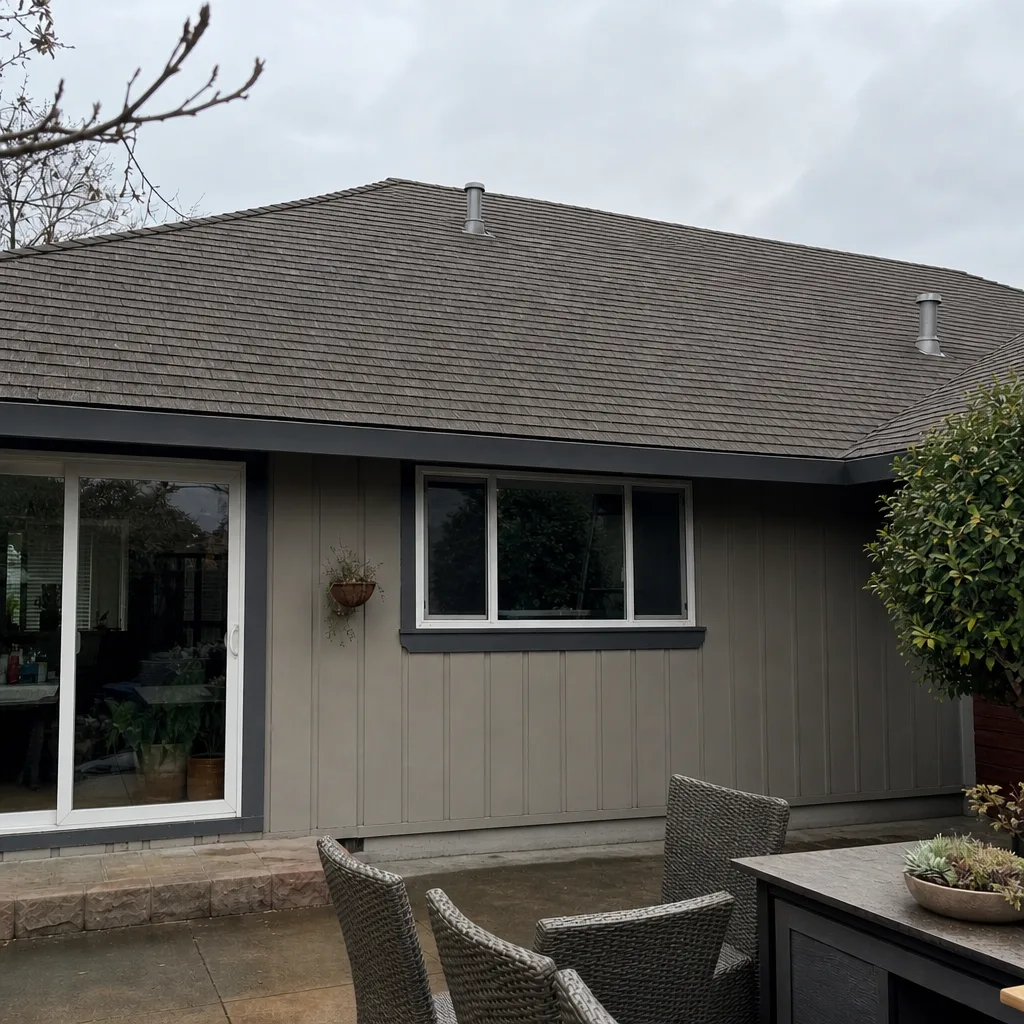
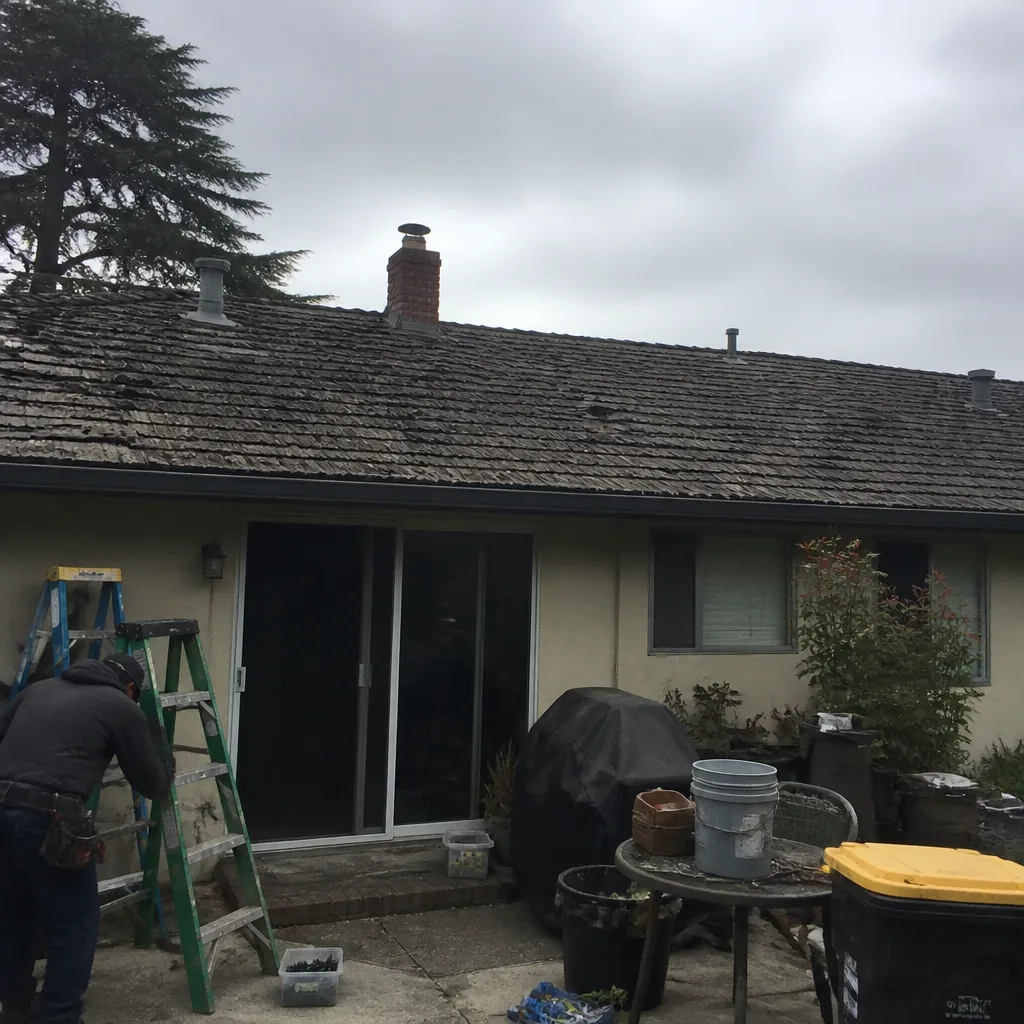
See the difference
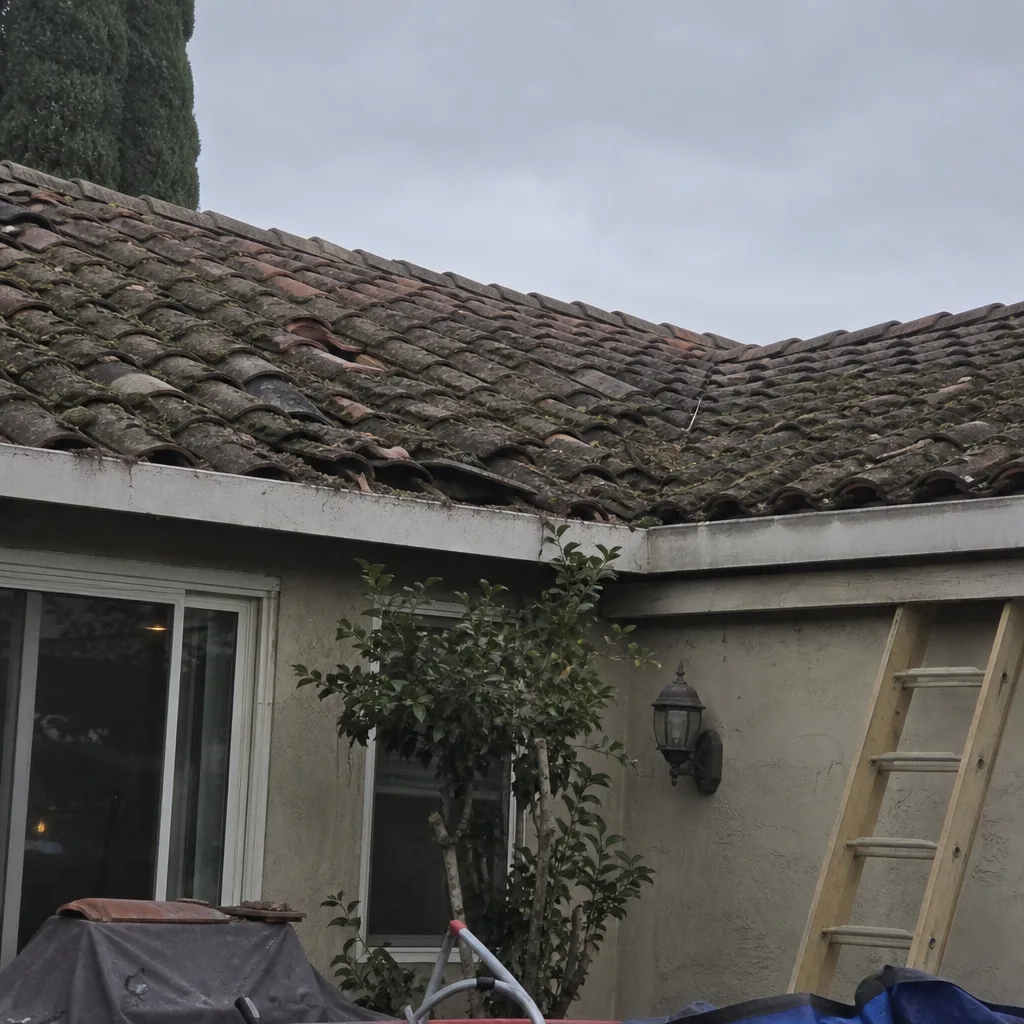 Before
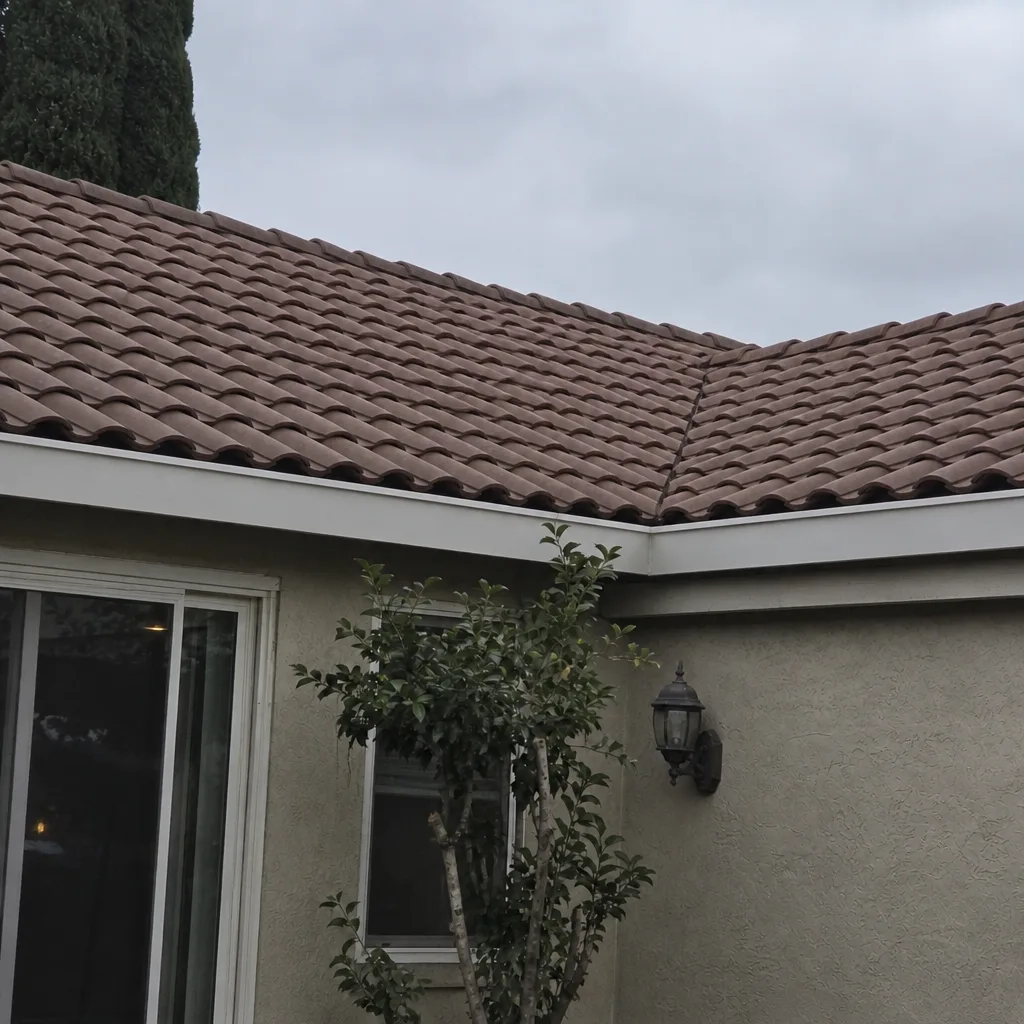 After
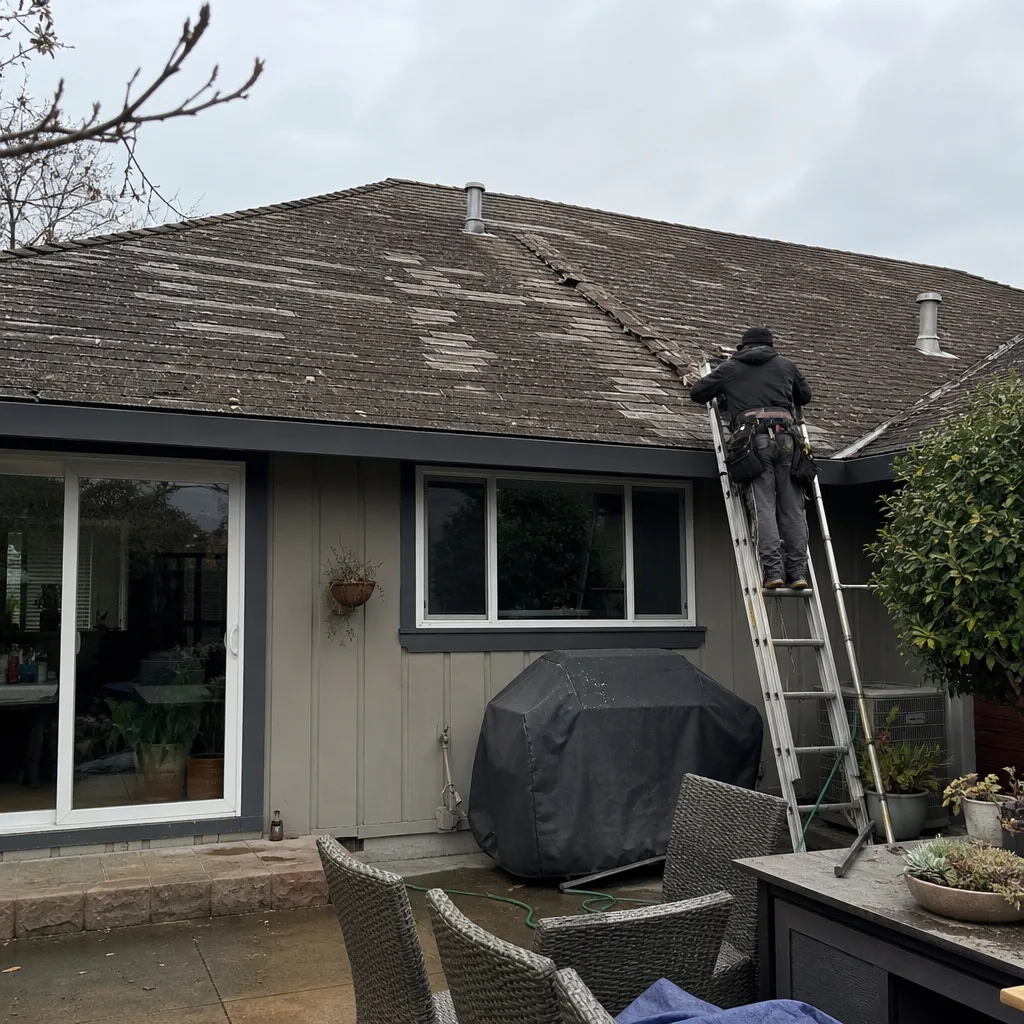 Before
 After
 Before
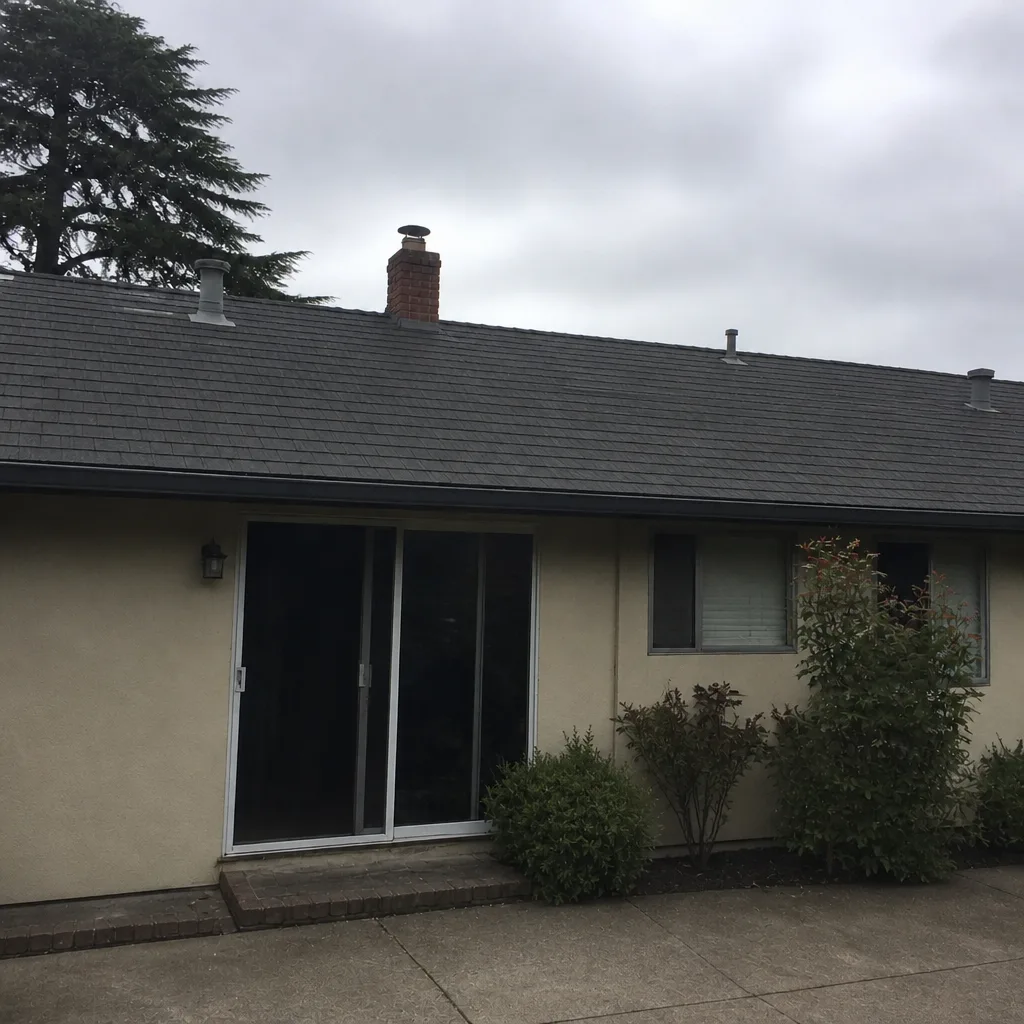 After
When to Call a Professional
Call a professional for any check that requires getting onto the roof, for any active leak or water stain, and for anything involving flashing, skylights, or low-slope membranes. Also call when you’re not sure whether a finding is cosmetic or structural – uncertainty at those levels is exactly what a professional assessment resolves. If the first heavy rain has already shown water inside, don’t wait out the season; water that finds a path once will use it again. Sunnyvale Roofer offers free estimates in Sunnyvale and treats inspection as its own service, so you can get an honest assessment without committing to anything. Call (833) 349-3199. We answer 24/7. Fast dispatch from 7am to 7pm, Sunday through Friday.
Frequently Asked Questions
Twice a year is the practical rhythm for most homes: once in early fall before the wet season, and once after the wet season to check for anything the rain revealed. That timing puts your inspection where it does the most good in a short, compressed rainy period. Homes with low-slope sections or nearby trees benefit from the same two-visit schedule plus a gutter check mid-season.
You can safely document from the ground – gutters, roofline, interior water stains, visible shingle issues – but anything that requires walking the roof or getting close to flashing, skylights, or a low-slope membrane should be left to a professional. Roof falls are a serious risk, and the checklist items that matter most are often the hardest to reach safely. A standing inspection from a professional is a low-risk way to catch what you can’t see.
Check your flashing and roof penetrations first – the chimney base, vent boots, skylight frames, and wall or pitch transitions. These are the most common sources of leaks and the most likely to fail silently over a dry summer. Valleys and gutters come next, and field shingles last.
Yes. A small leak means water has already found a path in, and it will keep using that path with every storm. Caught early, a minor leak is often a quick repair; left over a wet season, it can affect insulation, drywall, and structure. The time to act is before the next rain, not after.
Low-slope roofs need seam checks and drainage checks that pitched roofs don’t, because water drains more slowly and can pool. Watch for ponding after rain, clear drains and scuppers before the wet season, and have the seams and surface professionally inspected. On a mid-century Sunnyvale ranch home, a low-slope addition or carport is exactly where this applies.
Both. Avoiding leaks is the immediate goal, but consistent maintenance on the right materials also extends the useful life of the roof, since small failures are caught before they compromise the deck and structure. The most useful maintenance habit is knowing what’s on the roof (brand and product line), checking the high-risk items on a schedule, and addressing findings while they’re still small repairs rather than replacements.
The Bottom Line
A maintenance checklist is only as good as its order. Check your flashing and penetrations first, then valleys and gutters, then any low-slope sections, and treat the field shingles last. Do the fall prep before the first storm of Sunnyvale’s wet season, since the rainy months do their testing in a short window. Know what you can safely document from the ground and be willing to call a professional for anything that needs a closer look. The goal isn’t a perfect roof forever; it’s catching the small repair while it’s still small. If you’d like a professional assessment before the season turns, we’re glad to help.
Ready to get ahead of the wet season? Call (833) 349-3199 for a free estimate. We answer 24/7. Fast dispatch from 7am to 7pm, Sunday through Friday. Whether you need a single repair, a full assessment, or a plan for a roof that’s nearing the end of its life, we’ll give you an honest read on what your roof needs – and nothing it doesn’t.
Written by the team at Sunnyvale Roofer.