
Last updated November 15, 2026
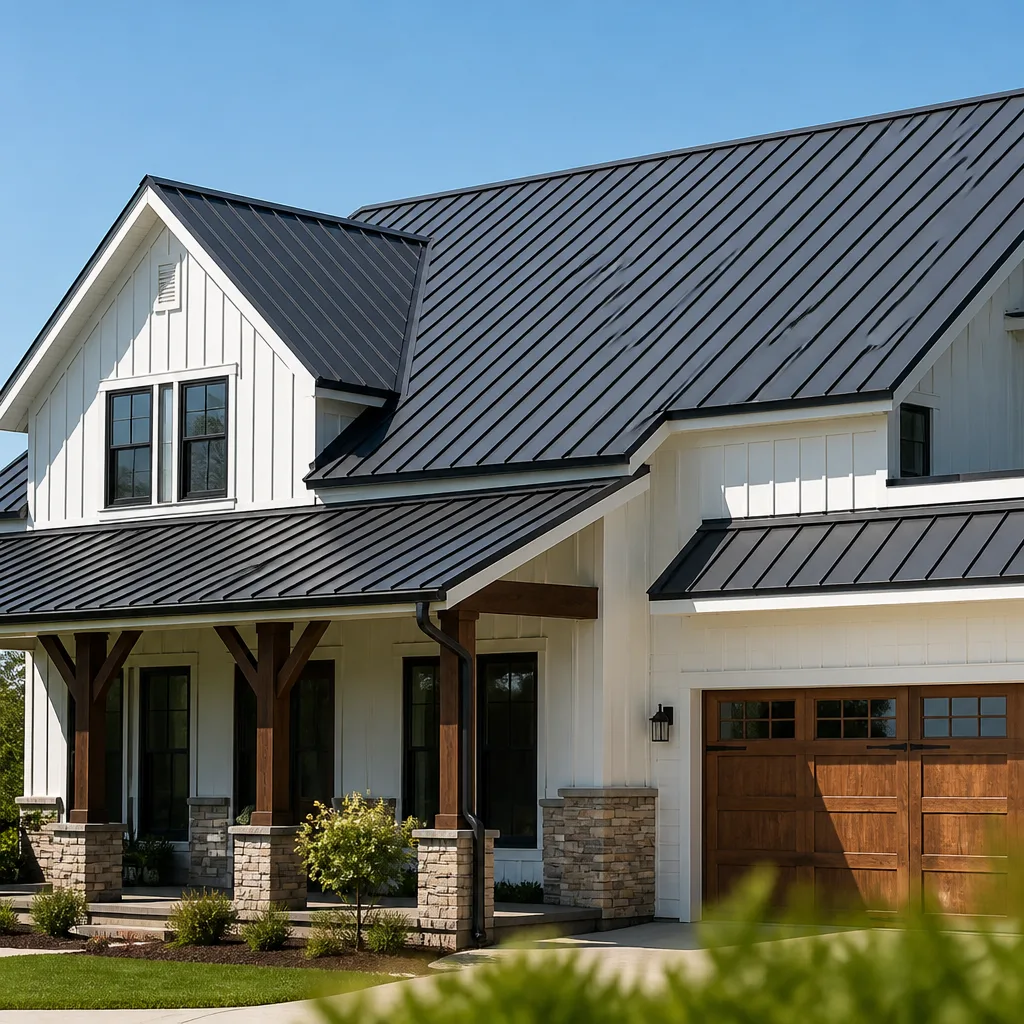 Metal roofing
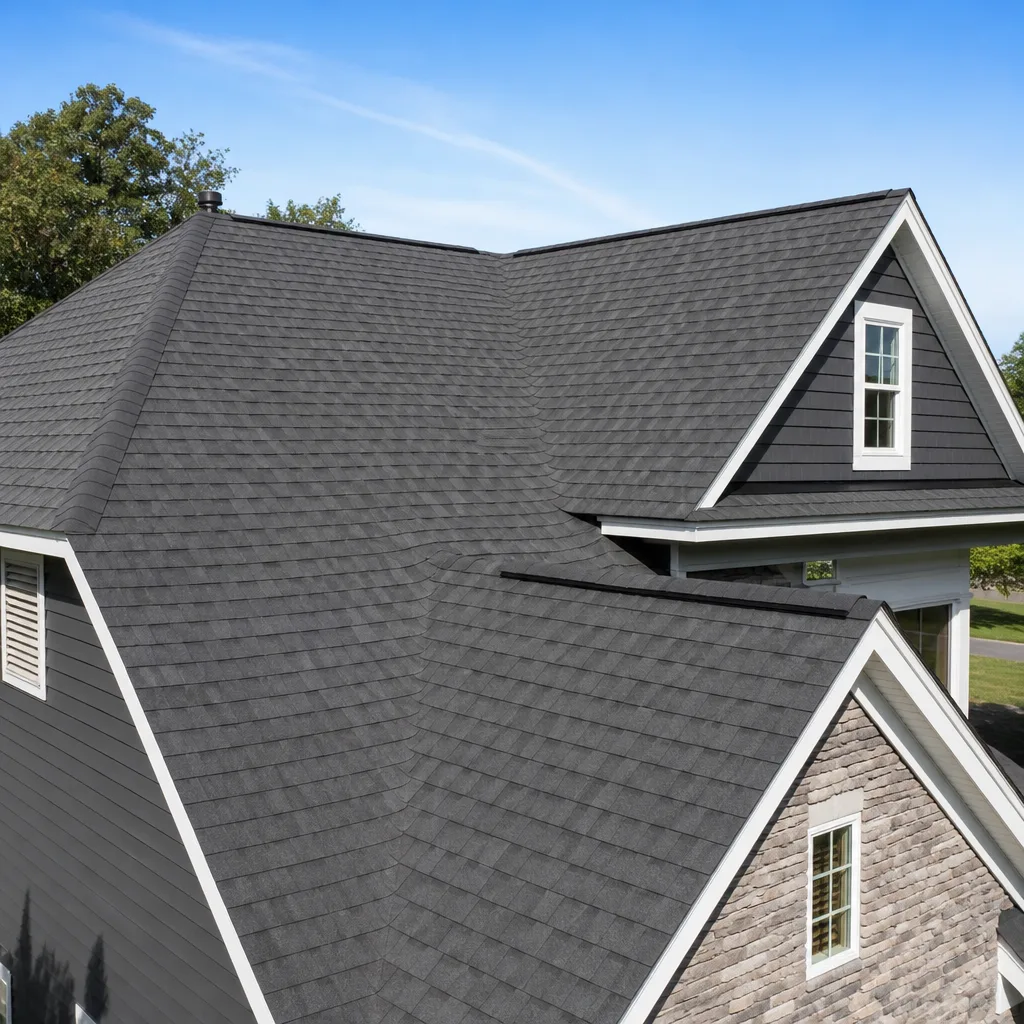
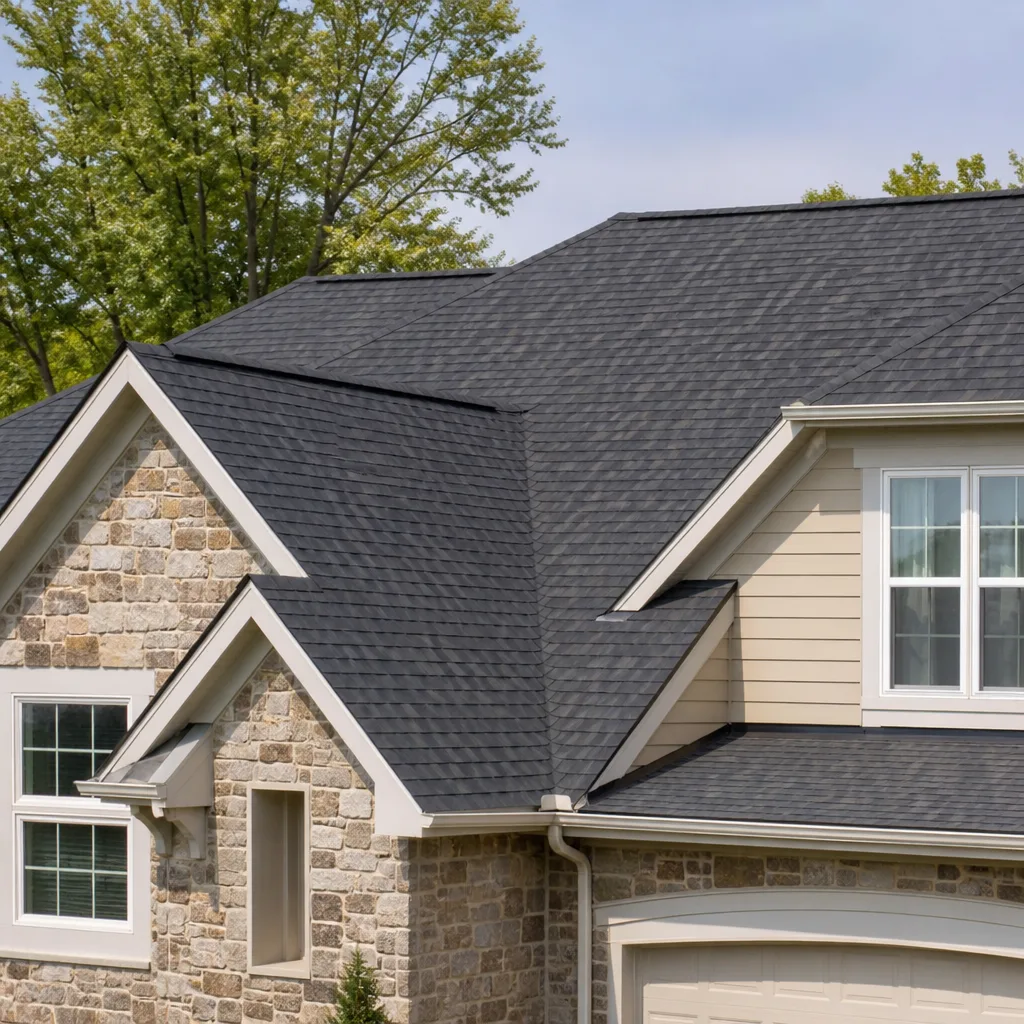
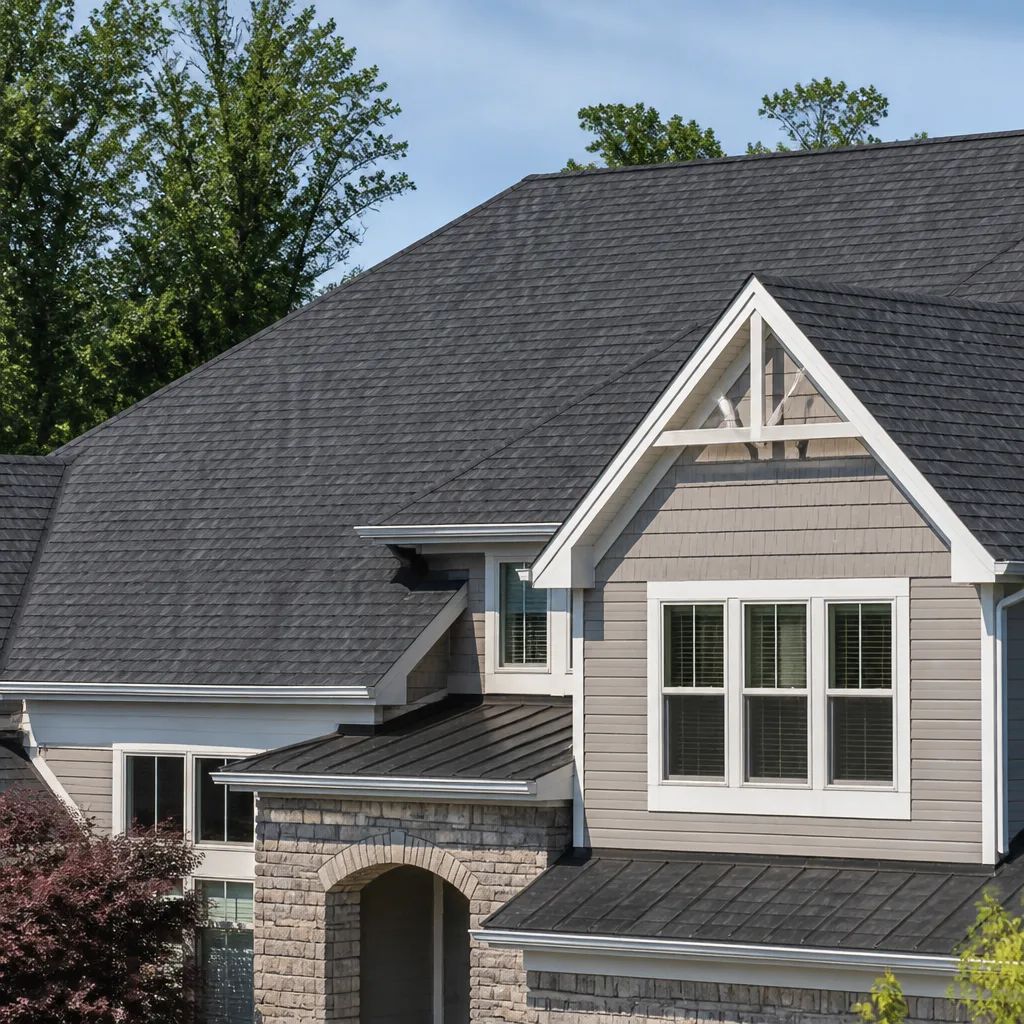 Architectural shingles
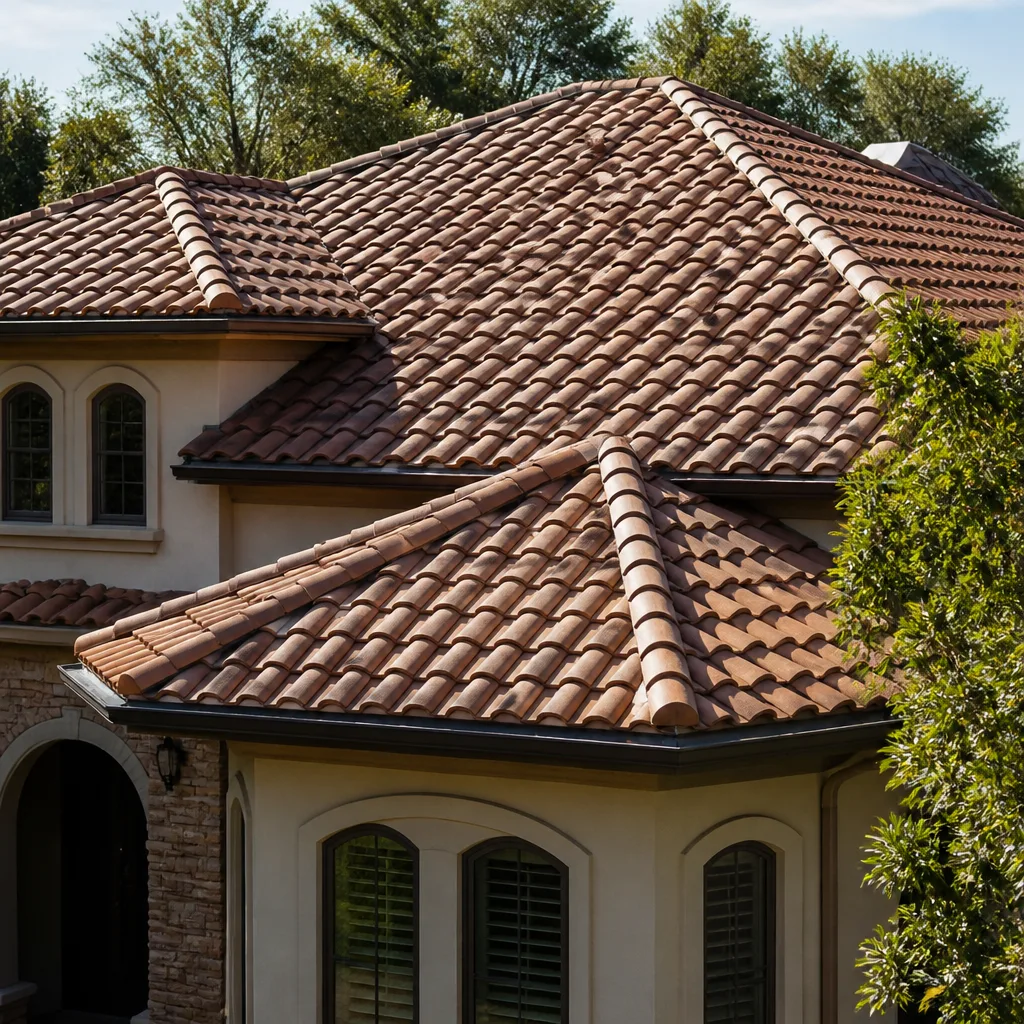 Tile roofing
 GAF
 Owens Corning
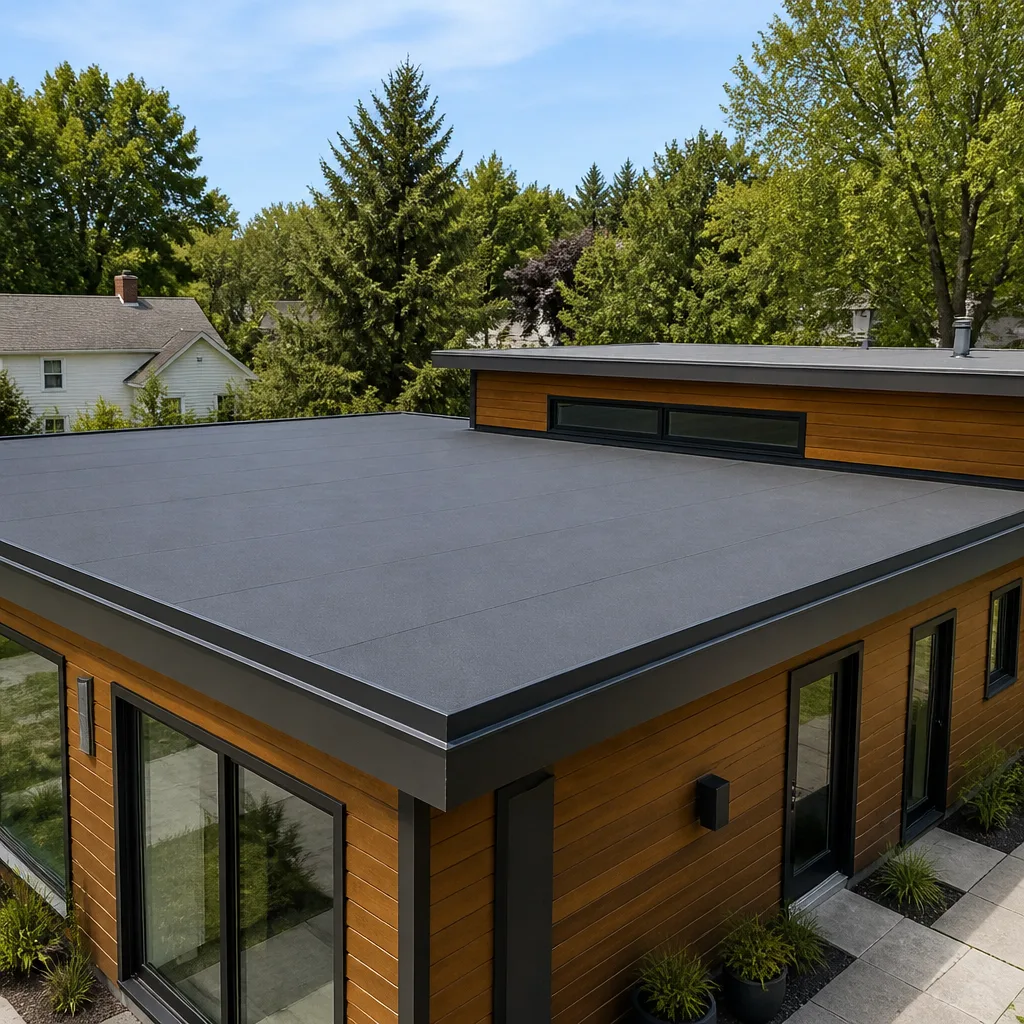 Flat & low-slope
Free roof inspection with deck photos before we talk money - GAF and Owens Corning certified installation
Roofing Cost Breakdown: The Sunnyvale Homeowner’s Reference for 2026
The cheapest roofing quote in Sunnyvale almost always omits one of four things: permit fees, haul-away, underlayment grade, or flashing replacement. That single sentence explains most of the price gap homeowners see between bids that claim to cover the same job. Two quotes can sit $6,000 apart and describe identical roofs, yet only one of them actually includes everything the project needs. We’ve watched homeowners chase the lowest number and end up paying the difference later in change orders that should have been in the original proposal. This guide standardizes what a complete, apples-to-apples Sunnyvale quote contains, how 2026 per-square costs break down by material, and which line items to audit before you sign.
Quick Answer
Roofing in Sunnyvale in 2026 typically runs about $450 to $900 per square (100 square feet) for composition shingles, $900 to $1,600 per square for tile, $1,000 to $1,800 per square for standing-seam metal, and $550 to $1,100 per square for flat or low-slope systems, before deck repair, permits, and disposal. A complete written quote should itemize all four of those add-ons, and the written estimate – not the verbal ballpark – sets the final price.
Styles & brands we work with
- Architectural shingles
- Metal roofing
- Tile roofing
- GAF
- Owens Corning
- Flat & low-slope
Table of Contents
- What does a roof cost per square in Sunnyvale in 2026?
- The four hidden line items that separate a $12,000 quote from an $18,000 quote
- How pitch, access, and story height change Sunnyvale labor rates
- Entry-level vs. premium shingles: what the price delta actually buys
- Material-by-material cost guide for Sunnyvale homes
- How to audit a roofing quote before you sign
- How long does a Sunnyvale roof replacement take?
- Permits, inspections, and code in Sunnyvale
What does a roof cost per square in Sunnyvale in 2026?
Most Sunnyvale roofs in 2026 land between $450 and $1,800 per square depending on material, with composition shingles on the low end and standing-seam metal on the high end. A “square” is 100 square feet of roof surface, not floor area, so a 2,000-square-foot single-story home with a typical gable roof is usually around 24 to 28 squares once you account for overhangs and pitch. Santa Clara County labor rates run higher than national averages, and that difference shows up across every material tier.
Here’s how the major material types break down per square for a tear-off and replacement job, using typical Sunnyvale market conditions:
- Composition shingles: $450 to $900 per square installed. The most common choice on Sunnyvale housing stock from the 1950s through the 1990s.
- Clay and concrete tile: $900 to $1,600 per square, with tile lift-and-relay options usually costing less than full replacement when the existing underlayment is the only failure.
- Standing-seam metal: $1,000 to $1,800 per square, including panel, clips, and trim.
- Flat or low-slope systems (modified bitumen, TPO): $550 to $1,100 per square, common on Eichler-style homes and additions across Sunnyvale.
- Underlayment-only replacement (tile roofs): $300 to $600 per square, because the tile comes off and goes back on.
Those are estimates, and the final price is set by the written estimate after inspection. Roofs with multiple layers to strip, unusual geometry, or deferred deck repair will land above those ranges. When we quote a Sunnyvale job, the per-square number is the last thing we calculate, not the first – because labor, disposal, and material all move independently.
The four hidden line items that separate a $12,000 quote from an $18,000 quote
The single biggest reason two Sunnyvale roofing quotes on the same house differ by 40% or more is that they cover different work. The four line items below account for the gap in most cases. If a proposal doesn’t mention them, ask before you sign.
- Permit fees. The City of Sunnyvale requires a building permit for most full reroofs, and the permit plus inspection cycle carries a fee that varies with the scope and square footage. A quote that says “permit by owner” is not cheaper – it shifts a real cost and a legal responsibility onto you. Ask directly: “Is the permit pulled in your name and included in this number?”
- Haul-away and disposal. Stripping two layers of old composition shingles off a Sunnyvale roof generates several tons of debris. Dumpster rental, dump fees, and the labor to load by hand instead of by chute all cost real money. A quote missing a disposal line will get one added later.
- Underlayment grade. Synthetic underlayment and a proper ice-and-water-style membrane at valleys and penetrations cost more than 15-pound felt. This is where a “cheap” quote quietly downgrades the layer that protects your deck from the rain that does fall here in winter. Ask which product is specified and what it costs per roll.
- Flashing replacement. New flashings at chimneys, skylights, vents, and wall intersections – plus valley metal where two roof planes meet – are frequently excluded. Reusing old flashing on a new roof is a shortcut that shows up as a leak within a few winters. Valley metal alone on a complex Sunnyvale roof can add $400 to $1,200 to a bid.
One more that sometimes hides: deck repair allowances. Most quotes include a per-sheet allowance for damaged sheathing found during tear-off, but the allowance can be as low as a couple of sheets. Ask how many sheets are included and what the per-sheet overage costs. That number is the difference between a fixed price and a surprise.
How pitch, access, and story height change Sunnyvale labor rates
Pitch and access are the two labor variables that scale most steeply, and they matter more in Sunnyvale than in flatter parts of the country because so much of the local housing stock has real roof geometry. A 4/12 pitch roof is comfortable to walk; an 8/12 roof needs roof jacks and staging; anything above that slows every step of the job.
What actually drives labor cost on a Sunnyvale roof:
- Pitch. Walkable roofs under 6/12 are the baseline. Steep roofs over 8/12 can add 25% to 40% to labor because of staging, slower tear-off, and safety setup.
- Number of stories. A two-story Sunnyvale home means material has to go up and debris has to come down without touching the ground cleanly. Ladders and staging add time to every phase.
- Access to the roof edge. Narrow side yards, mature landscaping, and low-hanging trees in neighborhoods like Cherry Chase and Ortega Park can slow a tear-off considerably. Some lots require material to be walked in by hand rather than dropped in a dumpster in the driveway.
- Roof complexity. Hip-and-valley roofs, dormers, skylights, and multiple penetrations each add cut-and-flash time. A simple gable roof on the same square footage can cost 15% to 25% less than a complex hip roof next door.
- Layers to strip. One layer is standard. Two or three layers of old shingles add tear-off time and disposal weight.
These factors are why a per-square estimate alone is a starting point, not a final number. When we size up a Sunnyvale roof for roof replacement, the site visit is where the real price is set – pitch, access, and deck condition are all determined in person. If you only have a phone ballpark, treat it as a rough band and not a quote.
Entry-level vs. premium shingles: what the price delta actually buys
The gap between a builder-grade shingle and a premium architectural shingle is typically $100 to $250 per square in Sunnyvale, and that difference buys more warranty years, a heavier mat, and better wind and impact performance. Whether it’s worth it depends on how long you plan to stay and what the HOA or neighborhood character calls for.
What the tiers actually mean in practice:
- Entry / value tier (think the base architectural lines from IKO or Tamko, and Boral’s economy concrete tile options): solid 3-tab and entry architectural products with a shorter warranty period. Fine for a rental, a quick sale, or a budget-constrained repair-and-reroof.
- Premium architectural tier (GAF Timberline-class, CertainTeed Landmark-class, Owens Corning Duration-class): heavier mats, better impact ratings, longer manufacturer warranty when installed with the full component system by a certified installer. The typical upcharge runs $100 to $250 per square and is where most Sunnyvale homeowners land.
- Designer / luxury tier: $300 to $600 per square over builder-grade, usually for high-profile tile or premium shingle lines where curb appeal is the priority. Less common on Sunnyvale housing stock than premium architectural.
Here’s the part most quotes leave out: the warranty delta often depends on the installer, not just the shingle. Manufacturer extended warranties frequently require certification and a full component system – the same brand’s underlayment, starter, ridge, and ventilation. We work with seven leading roofing brands, including GAF, CertainTeed, Owens Corning, IKO, Atlas, Tamko, and Boral, so we can match the shingle to your budget without steering you into one line. A brand-agnostic quote lets you compare tiers honestly. Confirm the specific warranty tier in writing before you sign, because a “50-year shingle” and a 50-year warranty on the whole roof system are not the same thing.
Material-by-material cost guide for Sunnyvale homes
Material choice is the single largest driver of total cost, and Sunnyvale’s mild, dry climate gives you more flexibility than a colder or wetter region would. There isn’t a snow load to design around here, which means lighter and more design-forward materials are on the table.
A closer look at what each material means for a Sunnyvale roof:
Composition shingles ($450 to $900/sq). The default choice on most Sunnyvale homes because it’s affordable, fast to install, and available in a wide range of profiles. Lifespan is typically 20 to 30 years depending on quality and ventilation. Ventilation matters in Sunnyvale’s warm summers – a poorly vented attic cooks a shingle roof from underneath and shortens its life.
Clay and concrete tile ($900 to $1,600/sq). Very common on Sunnyvale’s mid-century Mediterranean and ranch homes. Tile is heavy, so it may need structural verification before a swap, and lifting and relaying existing tile to replace only the underlayment can save significantly versus full replacement. Boral makes a range of concrete tile profiles that hold up well in this climate.
Standing-seam metal ($1,000 to $1,800/sq). The longest service life of the common options and excellent for the way Sunnyvale drains rainwater quickly off steep pitches. It’s the most expensive common material upfront, but the per-year cost can land close to tile or premium shingle once lifespan is factored in.
Flat and low-slope systems ($550 to $1,100/sq). Modified bitumen and single-ply membranes on Eichler-style homes, additions, and flat garages. Flat roofs need careful detailing at drains and seams, and the cost varies with membrane thickness and the number of penetrations.
One honest note on timing: material prices have moved more in the last several years than at any point in recent memory, so treat 2026 ranges as a planning band. The number that matters is the one in your written estimate, in hand, before you commit.
How to audit a roofing quote before you sign
Auditing a quote is mostly about asking the right questions. If any of the following are missing from a proposal, ask before you sign – and be wary of any contractor who won’t put the answer in writing.
- Is the permit included? If not, ask who pulls it and whose name is on it. A permit pulled in the contractor’s name is the standard.
- What’s the disposal line? Number of dumpsters, weight allowance, and whether it’s included or an allowance.
- Which underlayment and membrane products are specified? Brand, product, and quantity – not just “synthetic.”
- Is flashing included at every penetration and wall intersection? Chimney, skylights, vents, valleys, and step flashing. If it’s missing, it’s not a complete quote.
- How many sheets of deck repair are included, and at what per-sheet price for overage? This is where surprise change orders come from.
- Which warranty, from which manufacturer, and at what tier? Confirm the shingle and the labor warranty separately, and confirm the installer’s certification status.
- What’s the payment schedule, and is there a final inspection? A reasonable schedule ties payments to milestones, not one big deposit at signing. The final payment should follow the final inspection.
- Are old materials included or excluded in any structural upgrade? For tile roofs especially: is the weight of new tile verified against the existing structure?
We recommend putting three quotes side by side and mapping every line item against the checklist above. Nine times out of ten, the “cheapest” quote loses a line item and the price gap closes. If you want an independent read on what a roof actually needs before you solicit bids, a standalone roof repair inspection is the cleanest way to start – diagnosis before sales.
How long does a Sunnyvale roof replacement take?
Most Sunnyvale composition roofs are torn off and replaced in two to four working days, with tile and metal running longer because of material weight and detailing time. Weather doesn’t usually delay the work here – Sunnyvale’s dry season is long – but a heavy winter rain system can push a start date while the roof is open.
The typical sequence:
- Day one: staging, tear-off, deck inspection, and any sheathing repair.
- Day two to three: underlayment, flashing, and field shingle installation.
- Day three to four: ridge, vents, cleanup, and a final walk-through with you.
- Permit inspection: scheduled by the city after completion, sometimes a few days later depending on the jurisdiction’s queue.
Two things to plan around. First, the inspection cycle runs on the City of Sunnyvale’s schedule, not the contractor’s – build in a cushion if you’re coordinating a sale or refinance appraisal. Second, if the roof is tiled or metal, expect longer stretches because materials are delivered in stages and cuts are slower. We answer 24/7 for scheduling, and fast dispatch from 7am to 7pm, Sunday through Friday.
Permits, inspections, and code in Sunnyvale
Most full roof replacements in Sunnyvale require a building permit, and the final inspection is not a formality. The permit exists to confirm the manufacturer’s installation specs are met, particularly around flashing and ventilation, so a roofer who avoids pulling one is telling you something.
What a proper Sunnyvale roofing job includes on the permit side:
- Building permit pulled in the contractor’s name and included in the written quote.
- Manufacturer installation standards followed so the warranty remains valid. Every major brand we install – GAF, CertainTeed, Owens Corning, IKO, Atlas, Tamko, and Boral – publishes its installation requirements, and inspectors check against them.
- Final inspection passed before the job is closed out. Ask for the inspection result in writing.
- Ventilation checked against code minimums. Sunnyvale attics need adequate intake and exhaust to protect the roof from the summer heat.
If a proposal says “permit excluded” or “permit by owner,” ask what that costs and what your exposure is. It’s usually the single largest hidden line item after disposal.
Common Mistakes to Avoid
- Comparing total prices instead of line items. A $12,000 bid and an $18,000 bid only mean something once you map both against the same checklist. Without that, you’re comparing a full job to a partial one.
- Accepting a verbal ballpark as a quote. A phone estimate can’t account for pitch, deck condition, or access. The written estimate is what sets the final price.
- Not asking what the deck repair allowance includes. The number of included sheathing sheets and the per-sheet overage cost are common surprise charges on a Sunnyvale tear-off.
- Skipping the standalone roof inspection. If you’re not sure whether your roof needs repair or full replacement, an inspection costs far less than a replacement and answers the question first. Repair when repair makes sense; replace only when it’s time.
- Ignoring ventilation on a new roof. A new shingle roof on an under-vented Sunnyvale attic will age faster than it should. Ask about intake and exhaust when you review the quote.
- Overlooking flashing on a “cheap” bid. Reused flashing is the top cause of leaks on a brand-new roof. Any complete quote specifies new flashing at every penetration.
- Assuming all tile is the same. If your Sunnyvale home has clay or concrete tile, ask whether the structure is verified for the weight of the replacement tile and whether lift-and-relay is an option.
See the difference
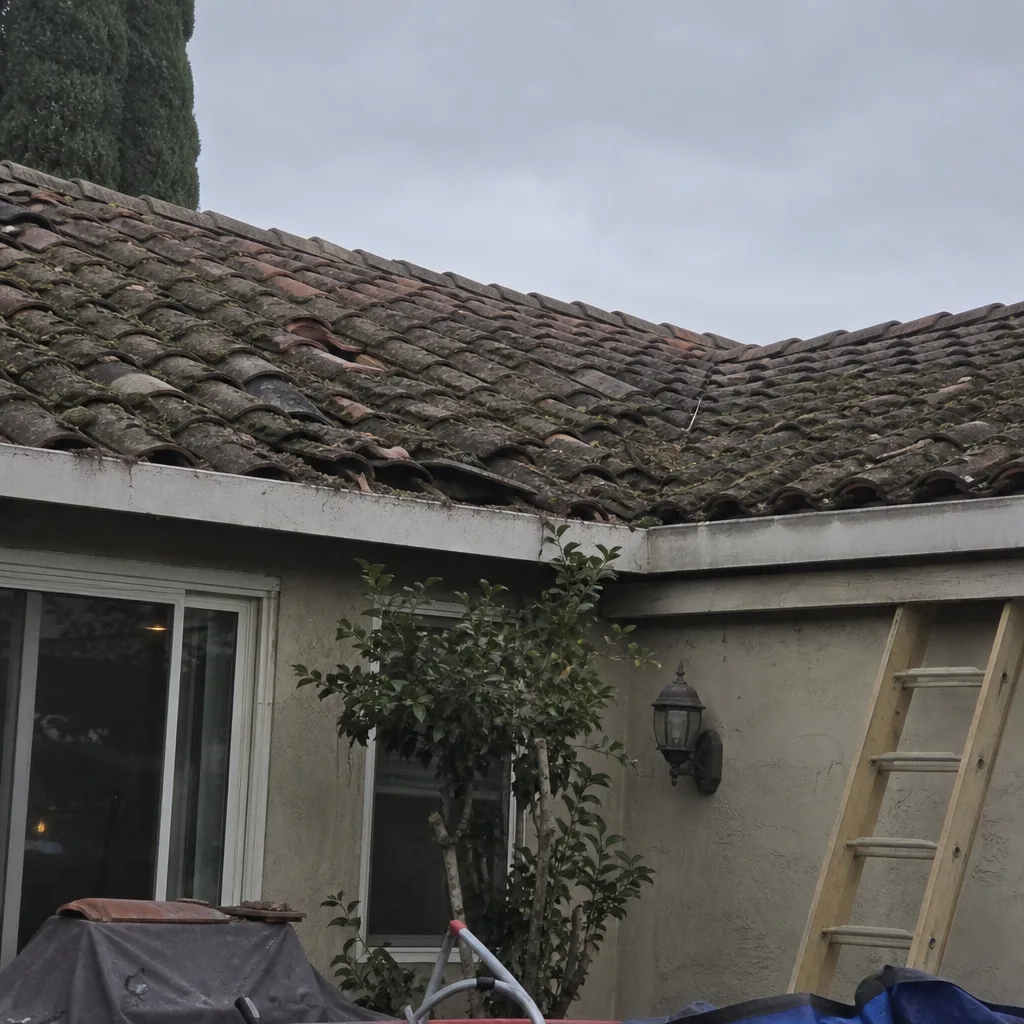 Before
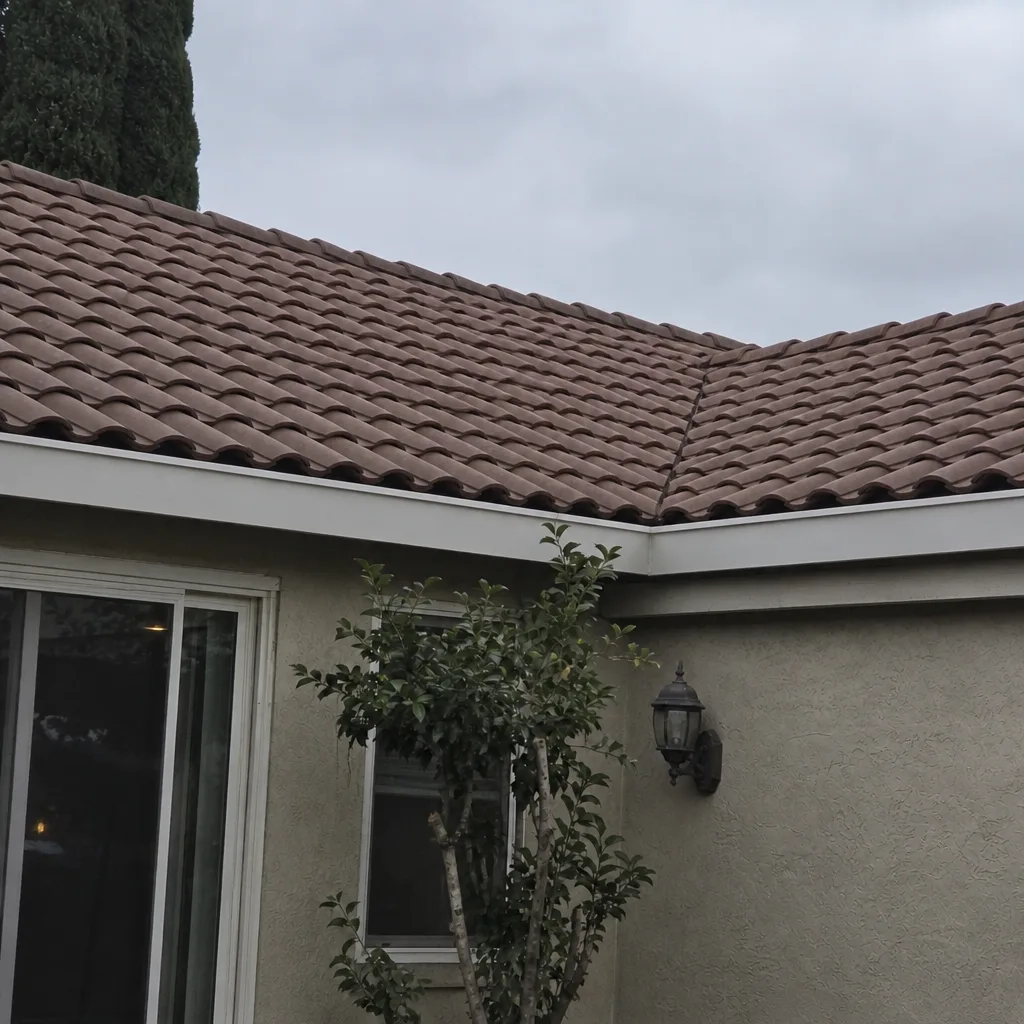 After
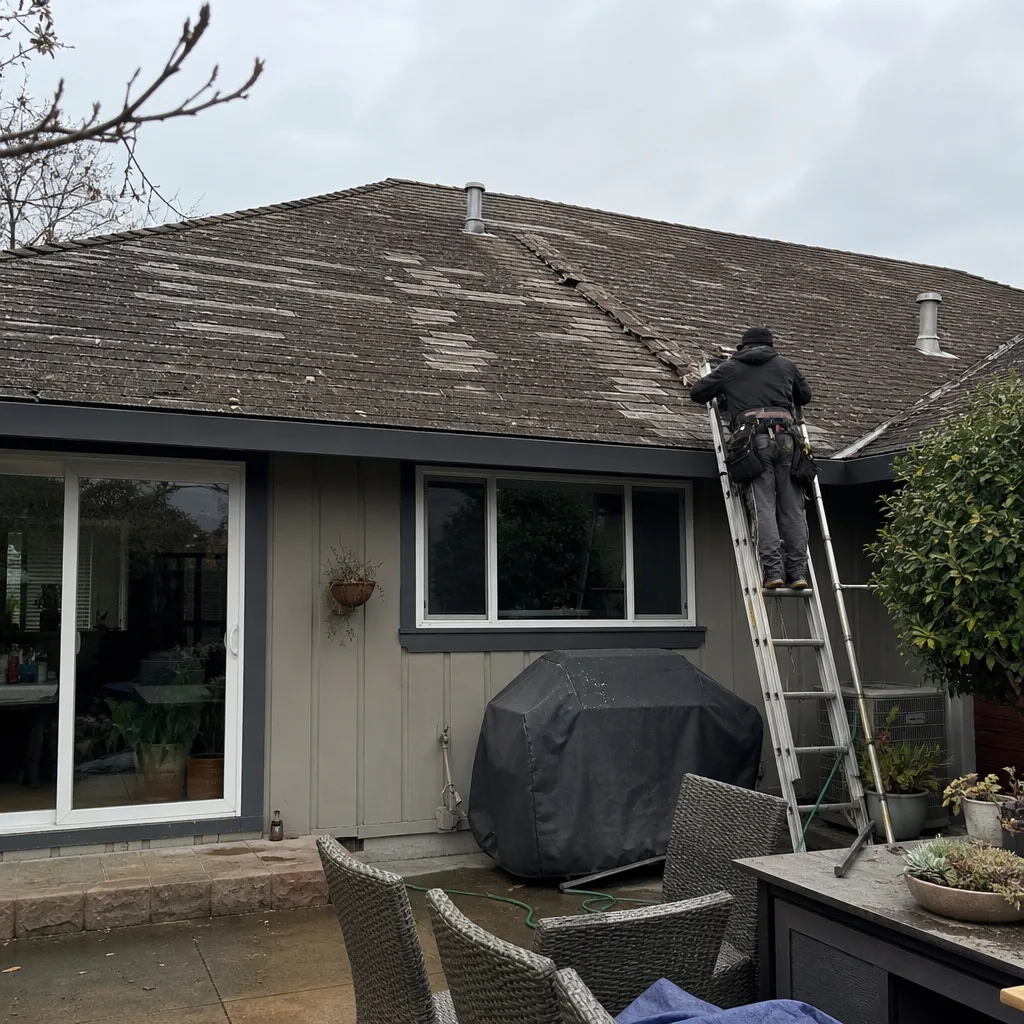 Before
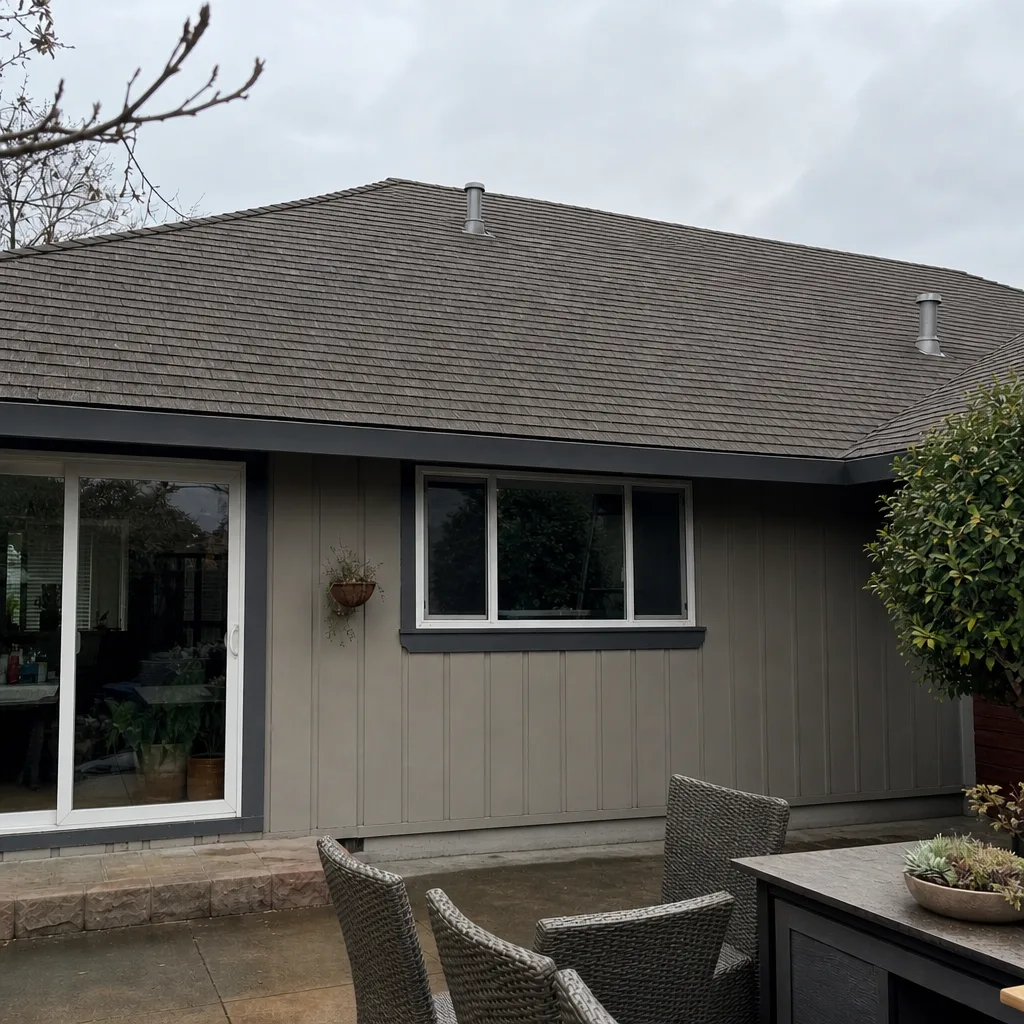 After
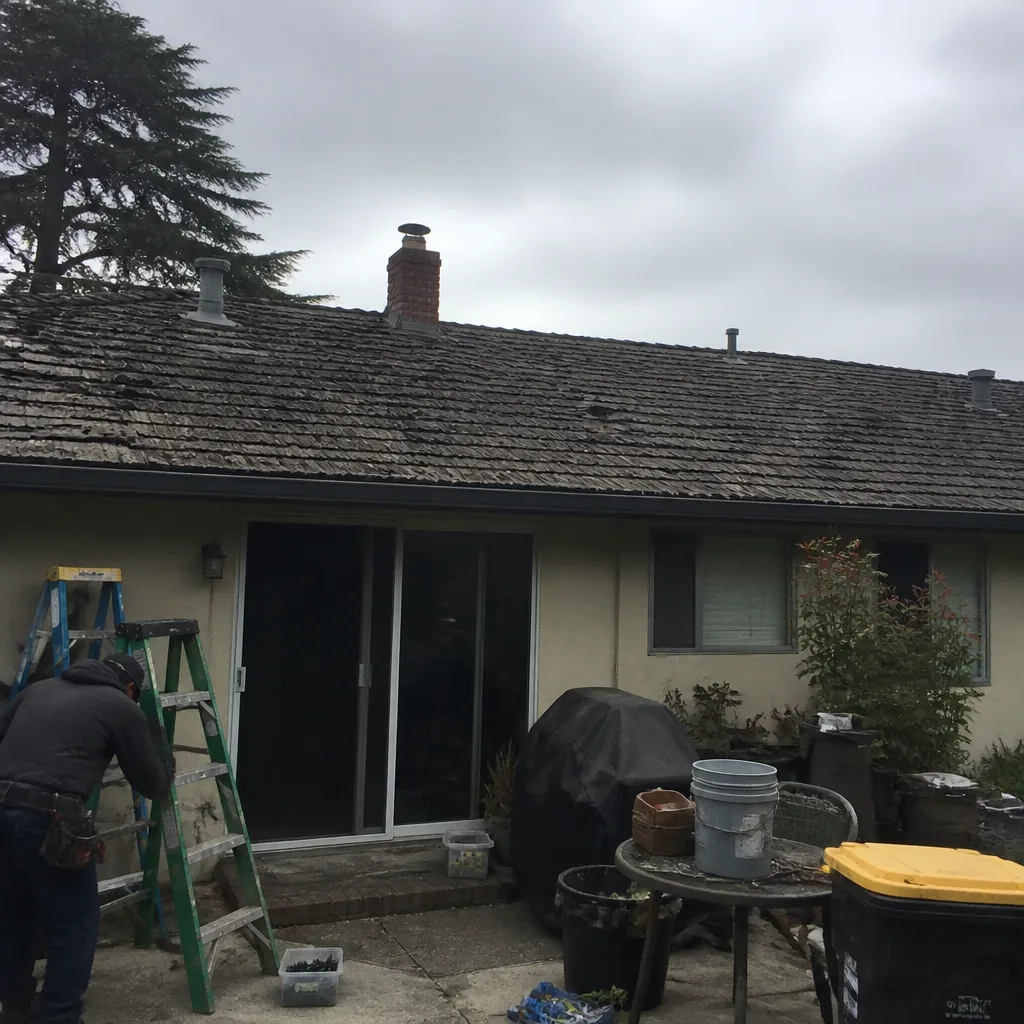 Before
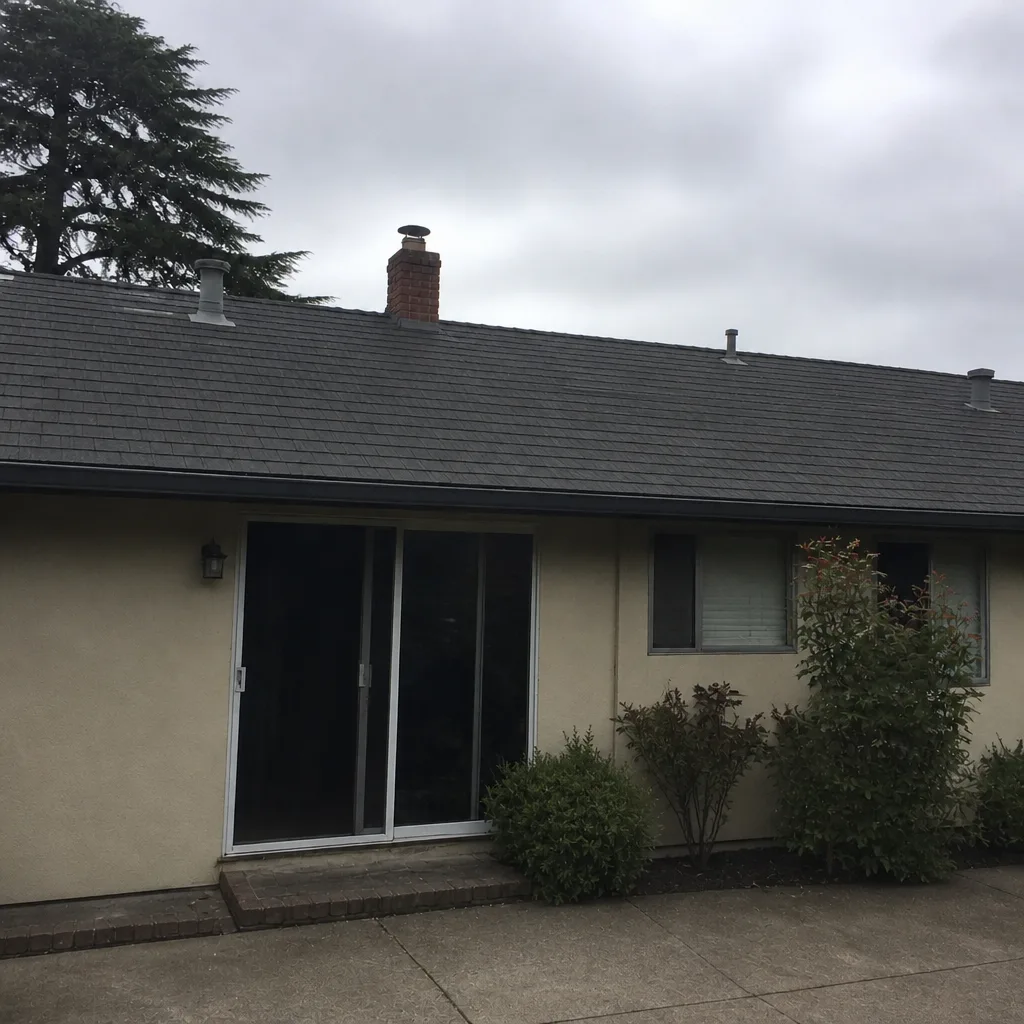 After
When to Call a Professional
Call a professional roofer when you see active leaks, missing or curling shingles, granule loss collecting in gutters, daylight showing through attic decking, or any sagging roof line. Also call after a significant windstorm or falling debris impacts the roof, because damage to the deck or flashing can hide under intact shingles. Recurring ceiling stains that appear and disappear with rain usually point to a flashing problem you can’t see from the ground, and the sooner it’s diagnosed, the less deck repair it will take. Roof work at height is genuinely dangerous, and the flashing and ventilation details are where jobs fail. Sunnyvale Roofer offers free estimates in Sunnyvale – call (833) 349-3199. We answer 24/7. Fast dispatch from 7am to 7pm, Sunday through Friday.
Frequently Asked Questions
A typical composition shingle roof in Sunnyvale runs roughly $450 to $900 per square, tile $900 to $1,600 per square, metal $1,000 to $1,800 per square, and flat systems $550 to $1,100 per square, before deck repair and permits. The written estimate sets the final price, and estimates are free. Call (833) 349-3199 to schedule yours.
The written estimate sets the price, and a properly itemized proposal shouldn’t move unless the inspection finds something the quote couldn’t see. The most common legitimate change is deck repair beyond the included allowance, found only after tear-off. Ask for the allowance and the per-sheet overage cost before signing, and put it in writing. Call (833) 349-3199 for a line-item estimate.
Yes – a complete Sunnyvale roofing proposal includes the permit fee and pulls the permit in the contractor’s name, then passes the final inspection. Any quote that lists “permit excluded” is not an apples-to-apples comparison. Call (833) 349-3199 and we’ll walk you through what your job requires.
Most composition shingle roofs in Sunnyvale take two to four working days for tear-off and installation, plus the city’s inspection cycle afterward. Tile and metal run longer because of material weight and slower detailing. Call (833) 349-3199 for an estimate that includes a realistic schedule for your roof.
Often yes – isolated leaks, damaged flashing, or a handful of missing shingles can be repaired rather than replaced, and a standalone roof inspection tells you which camp your roof is in. Repair when repair makes sense; replace only when it’s time. Call (833) 349-3199 to schedule a free estimate.
Manufacturer warranties on shingles range widely by tier and often depend on the installer being certified and installing the full component system. Labor warranties are separate and set by the contractor. Confirm both in writing, and ask which manufacturer and tier the quote specifies. Call (833) 349-3199 and we’ll review the warranty terms line by line.
The Bottom Line
The apparent 40% to 60% gap between roofing quotes in Sunnyvale is usually not a pricing mystery – it’s a line-item gap. Permit, disposal, underlayment grade, and flashing account for most of it, and deck allowances close the rest. Use the per-square ranges in this guide as a planning band, not a promise, and audit every quote against the same checklist before you compare totals. When you’re ready to price your roof, Sunnyvale Roofer offers free estimates across Sunnyvale – call (833) 349-3199. We answer 24/7, with fast dispatch from 7am to 7pm, Sunday through Friday. Our technicians have up to 9 years of experience, and every written quote is line-itemed so you can compare it honestly.
Written by the team at Sunnyvale Roofer.