
Last updated November 15, 2026
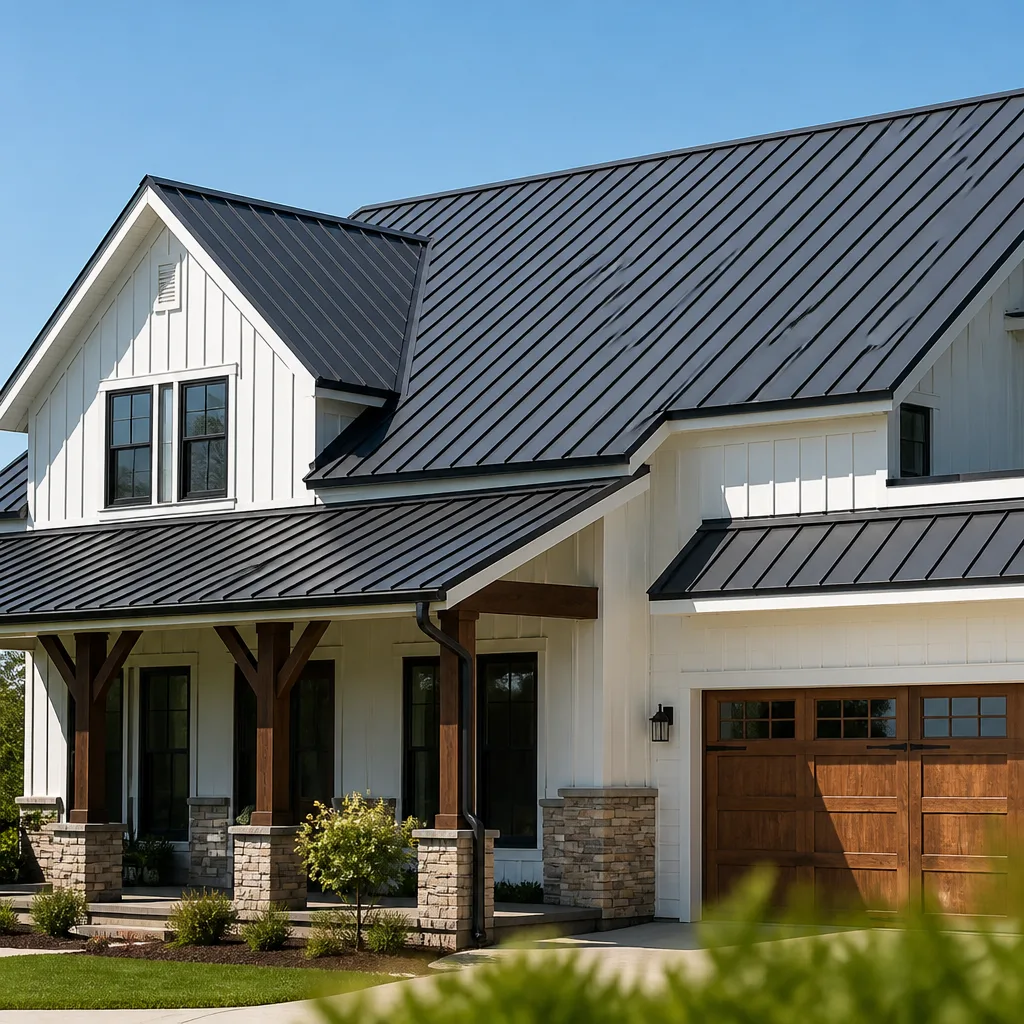 Metal roofing
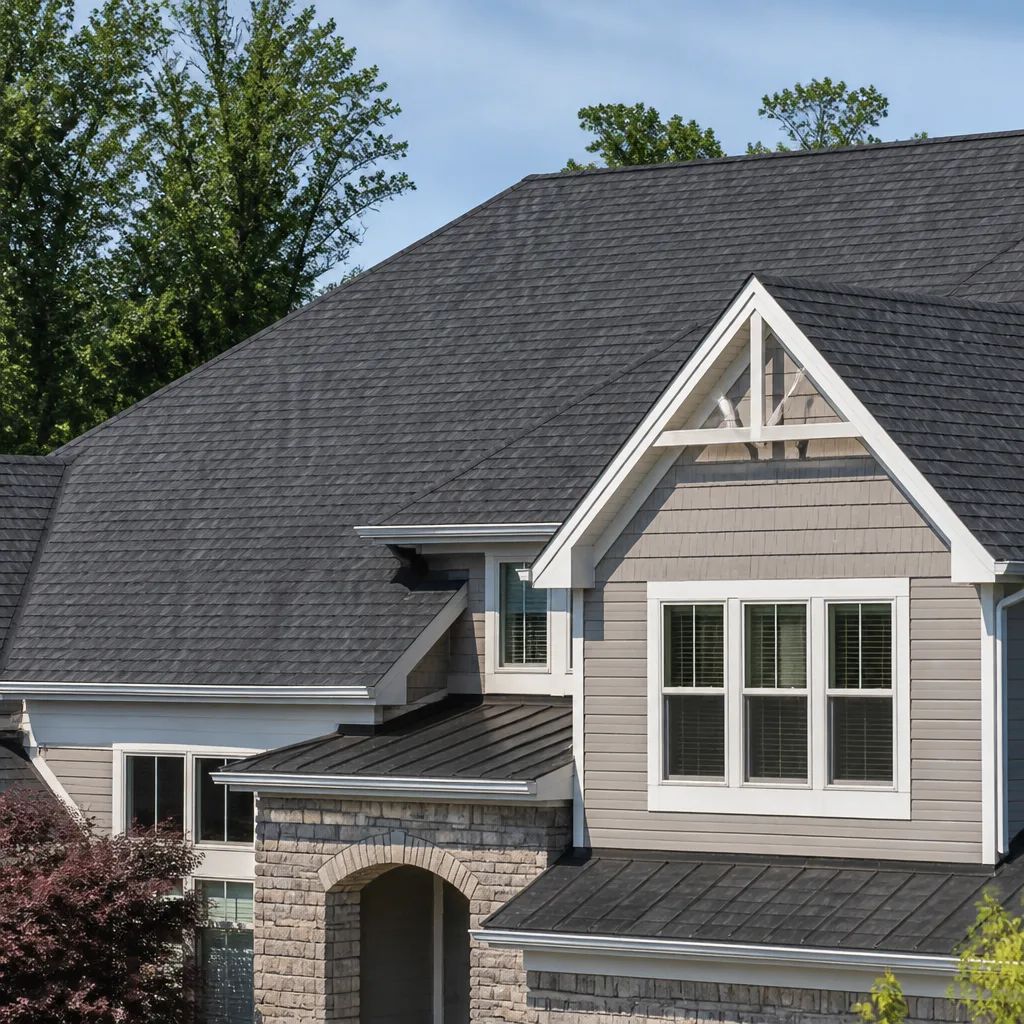 Architectural shingles
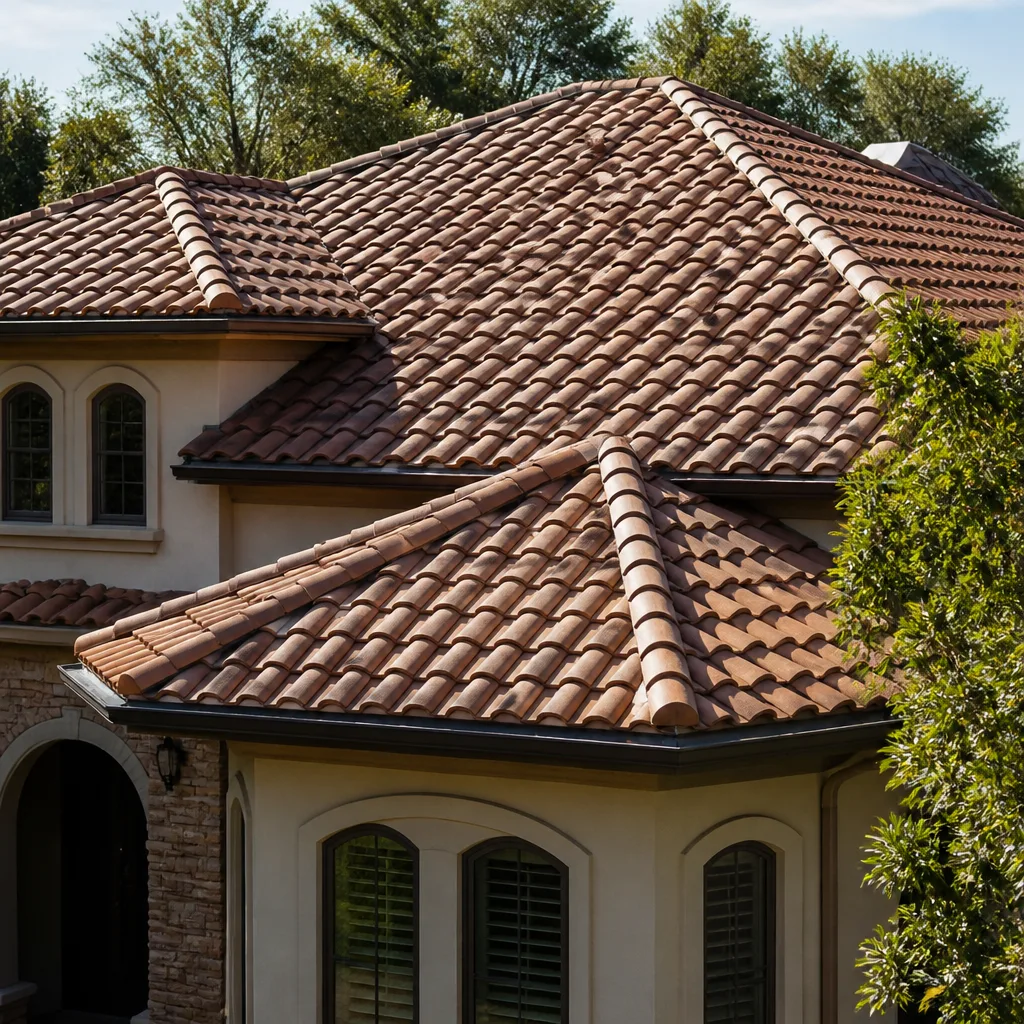 Tile roofing
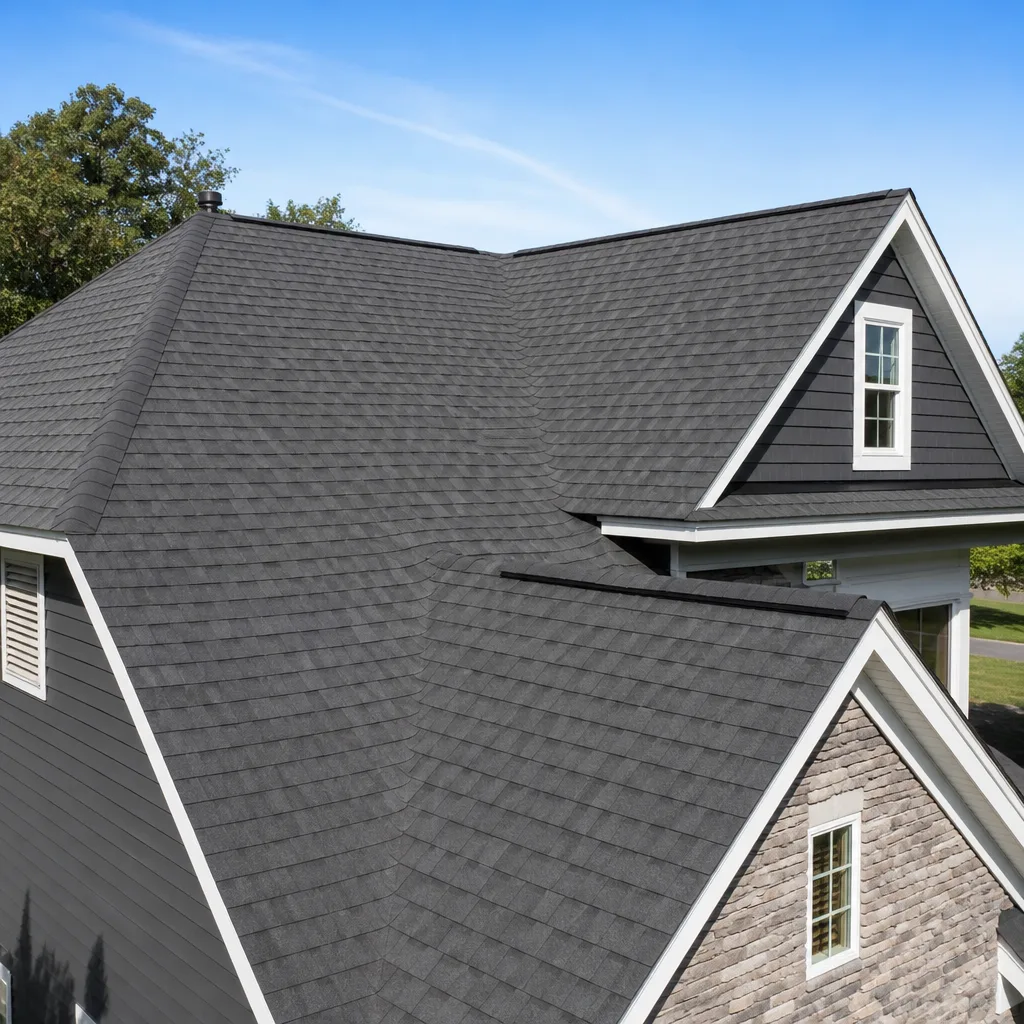 GAF
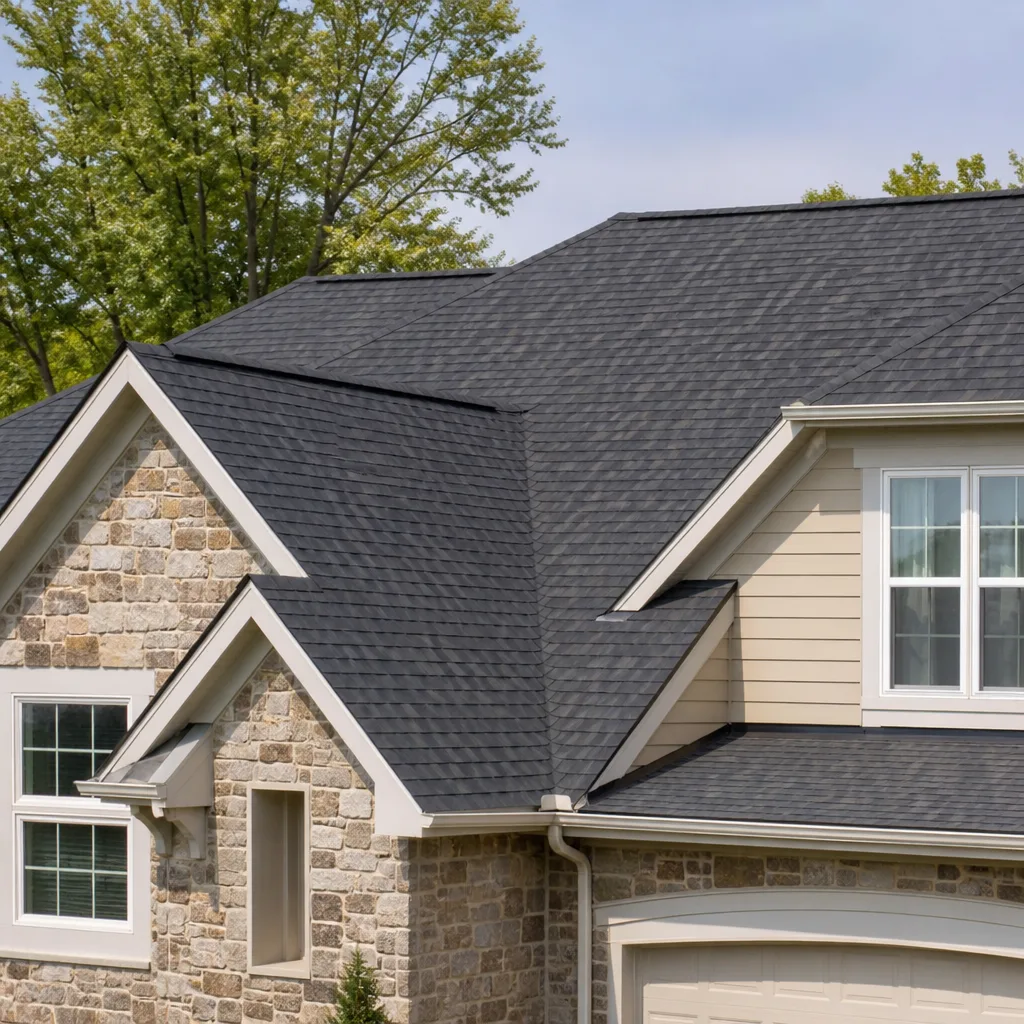 Owens Corning
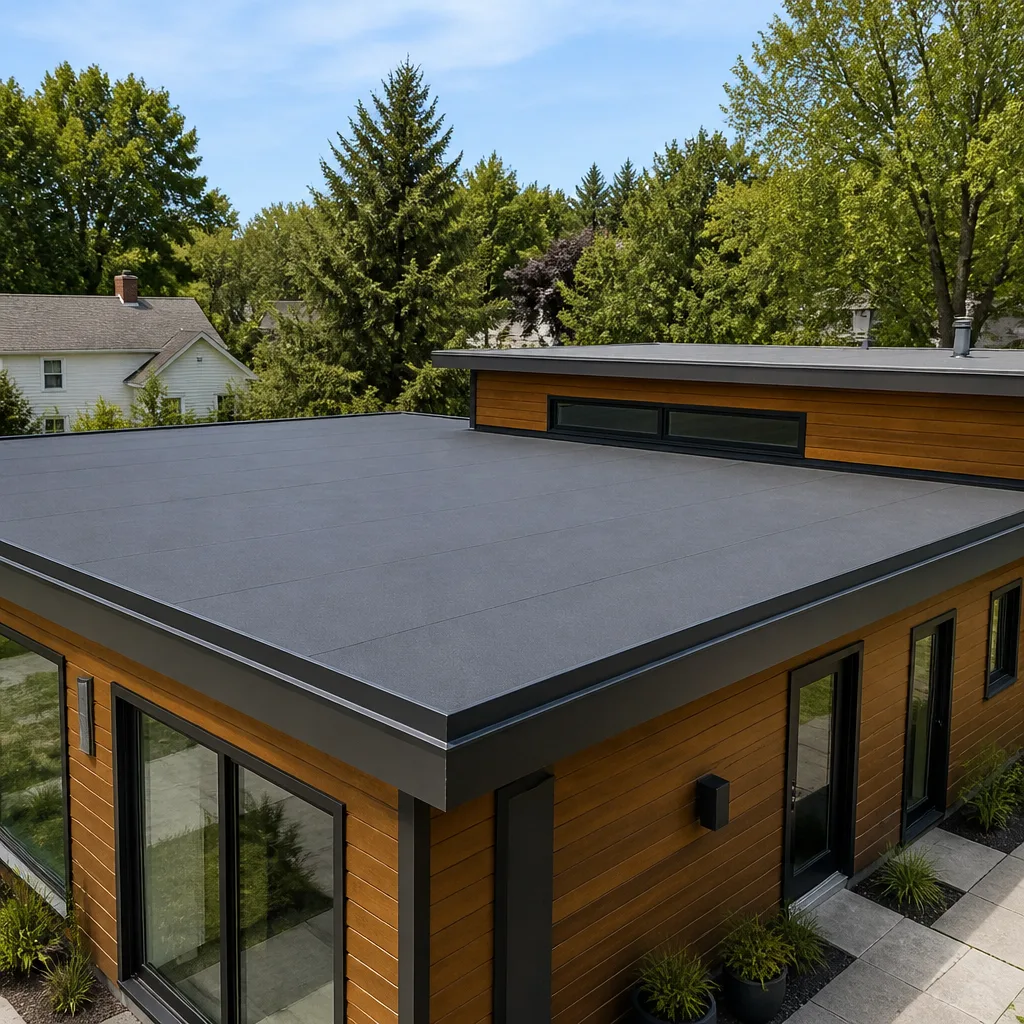 Flat & low-slope
Free roof inspection with deck photos before we talk money - GAF and Owens Corning certified installation
Roofing Permits, Codes & Inspections in Sunnyvale, CA: What You Need to Know
Most Sunnyvale homeowners assume a roof permit is only for new construction, so they let a contractor talk them out of one on a standard replacement. That’s backwards. Unpermitted roofing work is one of the most common snags in Santa Clara County real estate transactions, and it surfaces when you least want it to – during a sale. The fix after the fact costs more than the permit ever would have. This guide walks through the actual City of Sunnyvale thresholds that trigger a roofing permit, how California’s Title 24 energy code intersects with a roof replacement, what each inspection stage requires, and how HOA approval in Sunnyvale fits alongside city requirements. By the end, you’ll know exactly when you need a permit and when a repair is genuinely exempt.
Quick Answer
In Sunnyvale, CA, most roof replacements and any re-roofing that involves structural work, changing the roof covering type, or replacing more than a small percentage of a roof’s area trigger a City of Sunnyvale building permit. Minor repairs that replace a limited number of shingles or tiles on a like-for-like basis generally don’t require a permit, but a full tear-off and replacement almost always does. California Title 24 energy code also applies to roof replacements in Sunnyvale’s climate zone, meaning cool roof requirements and insulation thresholds come into play depending on scope.
Styles & brands we work with
- Architectural shingles
- Metal roofing
- Tile roofing
- GAF
- Owens Corning
- Flat & low-slope
Table of Contents
- When Does Sunnyvale Require a Roofing Permit?
- What “Like-for-Like” Replacement Really Means in Sunnyvale
- How California Title 24 Affects Your Sunnyvale Roof Replacement
- What a Sunnyvale Roofing Inspection Involves
- HOA Approval vs. City Permit in Sunnyvale’s Planned Communities
- The Sunnyvale Roofing Permit Process, Step by Step
- What Happens If You Skip the Permit
- Questions to Ask Before You Hire a Sunnyvale Roofer
When Does Sunnyvale Require a Roofing Permit?
Sunnyvale requires a building permit for the vast majority of roof replacement work. The city’s building division treats a re-roof as a structural and life-safety event, not just a cosmetic update, because the roof covering ties into fire separation, wind resistance, and energy compliance. If a contractor is tearing off existing material and installing a new roof covering down to the deck, plan on a permit.
The typical triggers for a City of Sunnyvale roofing permit include:
- A full tear-off and re-roof, regardless of whether the material is composition shingle, tile, or metal.
- Changing the roof covering type, such as going from shingle to tile, which changes the weight load and the underlayment requirements.
- Structural repairs to the roof deck, rafters, or sheathing that extend beyond cosmetic patching.
- Any work that changes the roof slope, adds a new penetration, or alters drainage.
- Installing a new roof covering over existing sheathing where the old roof had failed or was improperly installed.
Minor repairs generally fall outside the permit threshold. Replacing a handful of damaged shingles after a wind event, re-sealing a leak around a single vent, or repairing a small section of flashing usually doesn’t require a permit. The line is typically drawn at scope and area: a repair that stays small and matches the existing material is treated differently from a replacement that touches the majority of the roof surface.
In our experience, the confusion shows up around “partial” re-roofs. If you’re replacing more than a small fraction of the roof, or replacing an entire slope, most Sunnyvale permit reviewers will ask you to pull a permit for the whole scope of work. That’s a judgment call worth confirming directly with the city’s building department before work starts, and it’s better to ask early than to be told at a resale inspection. Call Sunnyvale Roofer at (833) 349-3199 to schedule a free estimate and get a clear read on your scope before anything else happens.
What “Like-for-Like” Replacement Really Means in Sunnyvale
Homeowners hear “like-for-like” and think it means no permit is needed. It usually doesn’t. Like-for-like simply means the new roof covering is the same material type and weight class as what’s being removed – same shingles for shingles, same tile profile for tile. It does not automatically exempt the work from a permit.
Under Sunnyvale code, a like-for-like replacement still triggers a permit when:
- The scope involves a full tear-off, even if the new material is identical to the old.
- The existing roof had multiple layers and the new installation requires stripping down to the deck.
- The underlayment and flashing are being replaced along with the covering.
- The work requires a Title 24 energy compliance check, which a like-for-like replacement in Sunnyvale’s climate zone typically does.
Where like-for-like frequently does avoid a permit is on genuinely small repairs. If one damaged shingle or a small section of ridge cap needs replacement to match what’s already on the roof, most Sunnyvale reviewers treat that as maintenance rather than a project. The problem area is when a contractor swaps out a big section of shingles and calls it “like-for-like repair” to sidestep a permit. That’s the pattern city inspectors look for, and it’s the pattern that gets flagged during a home sale.
If you’re not sure whether your Sunnyvale repair crosses the threshold, ask. It’s a short conversation with the building department, and it will save you a longer one down the road.
How California Title 24 Affects Your Sunnyvale Roof Replacement
Title 24 is California’s energy code, and it directly applies to roof replacements in Sunnyvale. The code sets cool roof requirements and insulation thresholds, meaning a re-roof isn’t just about what the shingles look like – it’s about how the assembly performs thermally. Sunnyvale falls into a climate zone where cool roof requirements apply to both steep-slope and low-slope roof replacements in most cases.
What Title 24 means for a Sunnyvale roof replacement in practice:
- Cool roof credits: New roof coverings must meet solar reflectance and thermal emittance thresholds for the applicable climate zone. This limits some low-cost, dark-colored products that don’t meet the “cool roof” ratings.
- Insulation upgrades: When the roof is being replaced, attic insulation often must meet the current code threshold as part of the permit scope. That’s not always the case, but it’s a frequent add-on in Sunnyvale.
- Documented compliance: The permit application typically requires Title 24 documentation, and the inspection usually includes a check that the installed product matches the documented compliance path.
This is where material selection gets interesting. A roofer who only sells one brand may steer you into a product that doesn’t meet the cool roof requirement because it’s what they stock. Our approach is different. We work with seven leading roofing brands – CertainTeed, Owens Corning, IKO, Atlas, and three others – so the material fits your home and the code, not our supply order. When a cool roof requirement narrows the playing field, the brand breadth gives us more room to find a compliant fit at the price point you want.
If you’re at the replacement stage, roof replacement starts with understanding what the code requires for your specific roof, then matching product. Not the other way around.
What a Sunnyvale Roofing Inspection Involves
A City of Sunnyvale roofing inspection isn’t a general look-see. It’s a compliance check against the permitted scope and the approved plans. Most Sunnyvale re-roof permits have two required inspection stages, though some jobs trigger a third for specific items.
Rough-In Inspection
The rough-in happens after tear-off but before the new covering goes on. This is where the inspector sees the parts of the assembly that will be hidden. What the contractor needs ready:
- Exposed roof deck, sheathing, and any structural framing, clean and visible for inspection.
- New underlayment installed to the manufacturer’s spec and the approved plans.
- Flashing detail at all penetrations, valleys, and wall intersections, installed and visible.
- Any required fasteners, edge metal, or drip edge installed and open for review.
If the contractor has already laid down the new shingles before the rough-in inspection, that’s a problem. The inspector can’t see what’s under it, and the job may need to be opened up or re-inspected, which delays everything.
Final Inspection
The final inspection happens after the roof covering is complete. What the contractor needs ready for the final:
- Completed roof covering with all field shingles or tiles installed to manufacturer and code spec.
- Finished flashing, vents, and penetrations sealed and covered correctly.
- Title 24 documentation and material packaging confirming the installed product matches the compliance path.
- Clean site, cleared debris, and full access to the roof surface for the inspector.
In our experience, the jobs that pass inspections the fastest are the ones where the contractor treated the rough-in as a real gate, not a formality. Passing both stages without a callback is normal when the installation follows the permitted plans – and it saves weeks on the project timeline.
HOA Approval vs. City Permit in Sunnyvale’s Planned Communities
Sunnyvale has a lot of properties inside HOAs, particularly in the planned neighborhoods around the north side of the city and in the newer developments near the downtown transit corridor. If your home is in an HOA, city permit approval and HOA architectural review are two separate processes, and you need both. The city doesn’t check for HOA approval, and the HOA doesn’t check for a city permit.
The two processes diverge in specific ways:
- What they review: The city cares about structural and life-safety compliance – code, Title 24 energy, fire, and wind. The HOA cares about aesthetics and consistency with neighborhood standards – material color, tile profile, visible roof pitch changes.
- Timeline: City plan review and HOA architectural review run on separate clocks. HOA approval is often the slower of the two because it goes through a board cycle.
- Approval scope: HOA approval does not equal a city permit, and a city permit does not equal HOA approval. Both must be in hand before the contractor starts.
The most common Sunnyvale HOA snag we see is a homeowner choosing a material that meets Title 24 cool roof requirements but doesn’t match the HOA-approved palette. The fix is to pick material and color in parallel – confirm the HOA will approve the color, and confirm the product meets the cool roof requirement in the same conversation. That’s a lot easier when your roofer has multiple brand lines to work with. CertainTeed and Owens Corning both offer cool-roof-rated color lines that HOA boards in Sunnyvale commonly accept, but checking the specific HOA palette is always the first move.
The Sunnyvale Roofing Permit Process, Step by Step
Here’s how the permit process typically runs for a Sunnyvale roof replacement:
- Confirm the scope. Decide whether this is a repair, a like-for-like replacement, or a full replacement that changes material or structure. The scope defines the permit path.
- Gather Title 24 documentation. The permit application needs energy compliance documentation for the climate zone. Your contractor should handle this, but confirm it’s part of the bid.
- Submit the permit application to the City of Sunnyvale building division with plans and product specs.
- Get HOA approval in parallel if the property is in an HOA. Do not wait for the city permit to finish before starting HOA review.
- Pay permit fees and receive the approved permit. Fees are set by the city based on scope and valuation.
- Post the permit on the job site where visible, and keep plans on-site during work.
- Schedule the rough-in inspection after tear-off, once underlayment and flashing are installed.
- Schedule the final inspection after the roof covering and flashing are complete.
- Keep the final inspection sign-off with your home records. You’ll need it at resale.
The permit process is a series of small checkpoints, and each one is an opportunity to catch a scope mistake before it costs you. If you’re working with us, we handle the permit application, the Title 24 documentation, and the inspection scheduling as part of the project. We pull the permits, we pass the inspections – and we leave you with documentation you can hand to a buyer without hesitation. Our technicians have up to 9 years of experience with Sunnyvale roofing scopes, which means less guesswork about what a given job will require.
For a scope that starts smaller, like a leak or storm damage, the same logic applies at a smaller scale. A roof repair is often permit-exempt, but it’s still worth documenting. Before the repair gets bigger than it needs to be, get a diagnosis. A standalone roof inspection from us gives you a clear read on whether you’re looking at a repair, a partial, or a replacement – and the honest answer is sometimes that repair is the right call. Repair when repair makes sense. Replace only when it’s time.
What Happens If You Skip the Permit
Skipping the permit on a Sunnyvale roof replacement creates a liability that surfaces later. The most common point of discovery is a real estate transaction, when a buyer’s inspector flags unpermitted work and the deal slows down or stalls. The buyer’s lender may require the work to be permitted retroactively, which means opening walls, pulling a new permit, and potentially removing some of the work that was done without a permit.
The specific problems unpermitted roofing work creates in Sunnyvale:
- Title 24 non-compliance: If the roof wasn’t permitted, it wasn’t reviewed for cool roof and insulation compliance. That’s a code violation even if the roof looks fine.
- Insurance exposure: If a future roof failure leads to a claim, the insurer can ask whether the work was permitted. Unpermitted work is a common reason an insurer reduces or denies a claim.
- Resale friction: Buyers and their agents in Santa Clara County know to ask. Unpermitted roof work shows up on disclosures and often becomes a negotiation point that costs far more than the permit fee.
- No manufacturer warranty support: Some manufacturer warranties require installation to code, which most manufacturers interpret as including a permit. Unpermitted work can void portions of the warranty on GAF, CertainTeed, and Owens Corning products.
In our experience, the permit is the cheapest part of the project. It’s the cost of doing it right, and it protects your home’s value at resale in a way that nothing else on the scope does.
Questions to Ask Before You Hire a Sunnyvale Roofer
Whether you hire us or anyone else, asking the right questions up front saves you from the permit problems above. Here’s what we recommend asking any contractor bidding on a Sunnyvale roof:
- “Will you pull the permit?” The answer should be yes for anything beyond a small repair, and it should be in the written bid.
- “Who handles Title 24 documentation?” The contractor should handle it or show you who does. If they’ve never heard of Title 24, that’s a red flag.
- “What’s your inspection track record?” Ask how many callbacks they’ve had on rough-in or final inspections. A contractor who knows how Sunnyvale inspectors work will have a clear answer.
- “What brands do you install?” A contractor working from a single brand will steer you to that brand regardless of what your roof needs. A contractor with multiple brand lines can recommend based on the home, the code requirements, and your budget.
- “What does the written estimate include?” Permits, Title 24 documentation, inspection scheduling, tear-off, disposal, materials, and labor should all be visible. If the estimate is a single number with no line items, ask for a breakdown.
Every job starts with an honest inspection. That’s how we work, and it’s the standard we’d want applied to our own homes. If a contractor wants to quote a replacement before they’ve looked at your roof, that’s the pattern to walk away from.
Common Mistakes to Avoid
- Believing “like-for-like” means no permit. Like-for-like refers to material match, not permit exemption. A full tear-off and replacement still needs a permit in Sunnyvale even if the new shingles look identical to the old ones.
- Choosing a material before checking Title 24 compliance. Some shingle colors and tile profiles don’t meet Sunnyvale’s cool roof requirement. Pick the product and confirm compliance in the same step, not in sequence.
- Getting the city permit but skipping the HOA approval. City permit and HOA architectural approval are separate processes. In Sunnyvale’s planned communities, you need both before work starts.
- Letting the contractor install shingles before the rough-in inspection. The rough-in is a gate, not a formality. Covering the assembly before inspection means the inspector can’t see the work, which triggers a callback or a strip-down.
- Not keeping the final inspection sign-off. You’ll need the final sign-off at resale. Keep it with your home records the same way you’d keep a title document.
- Trusting a “no permit needed” sales pitch to save time. The time saved by skipping a permit is a fraction of the time lost at resale. Skipping the permit is the faster way to a slower sale in Sunnyvale.
- Hiring a contractor who quotes a replacement before an inspection. A proper bid starts with a diagnosis. If a roofer quotes a full replacement without looking at your roof, the quote isn’t grounded in your home’s actual condition.
See the difference
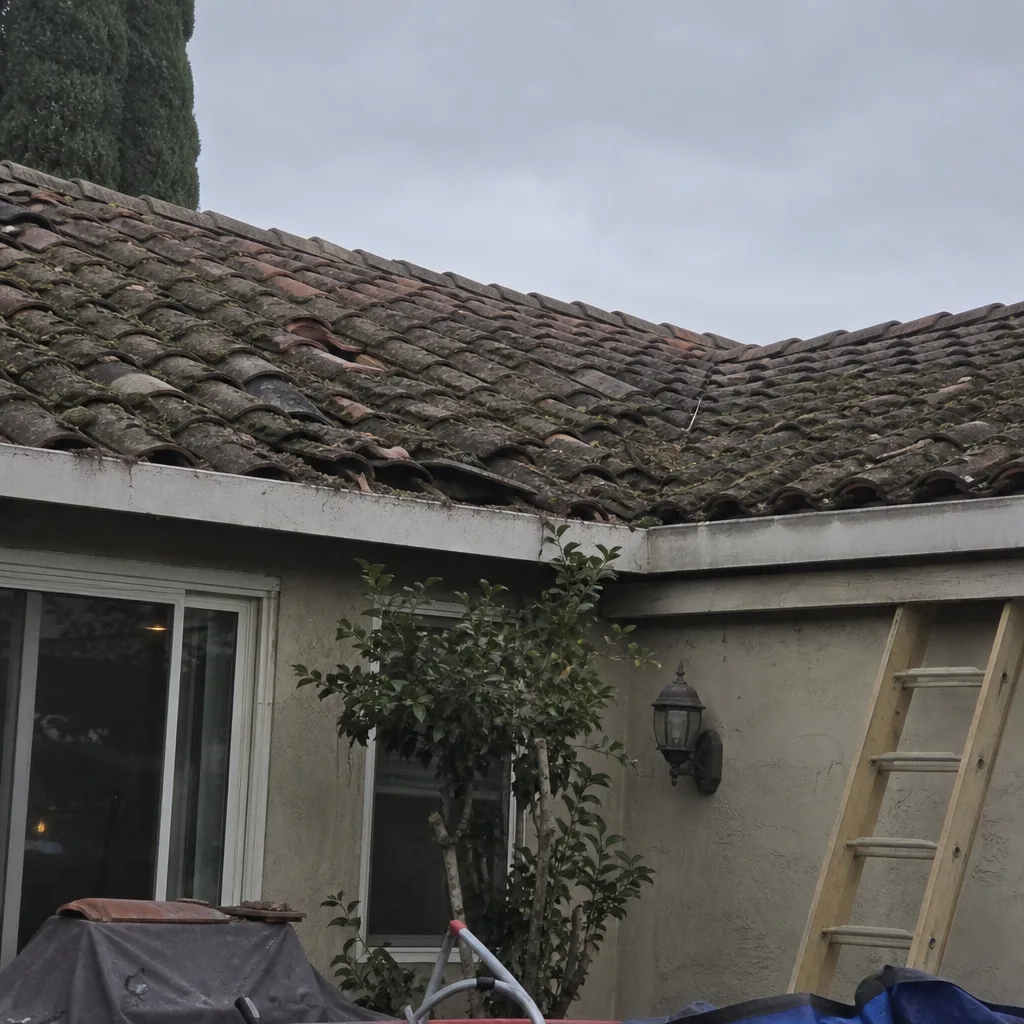 Before
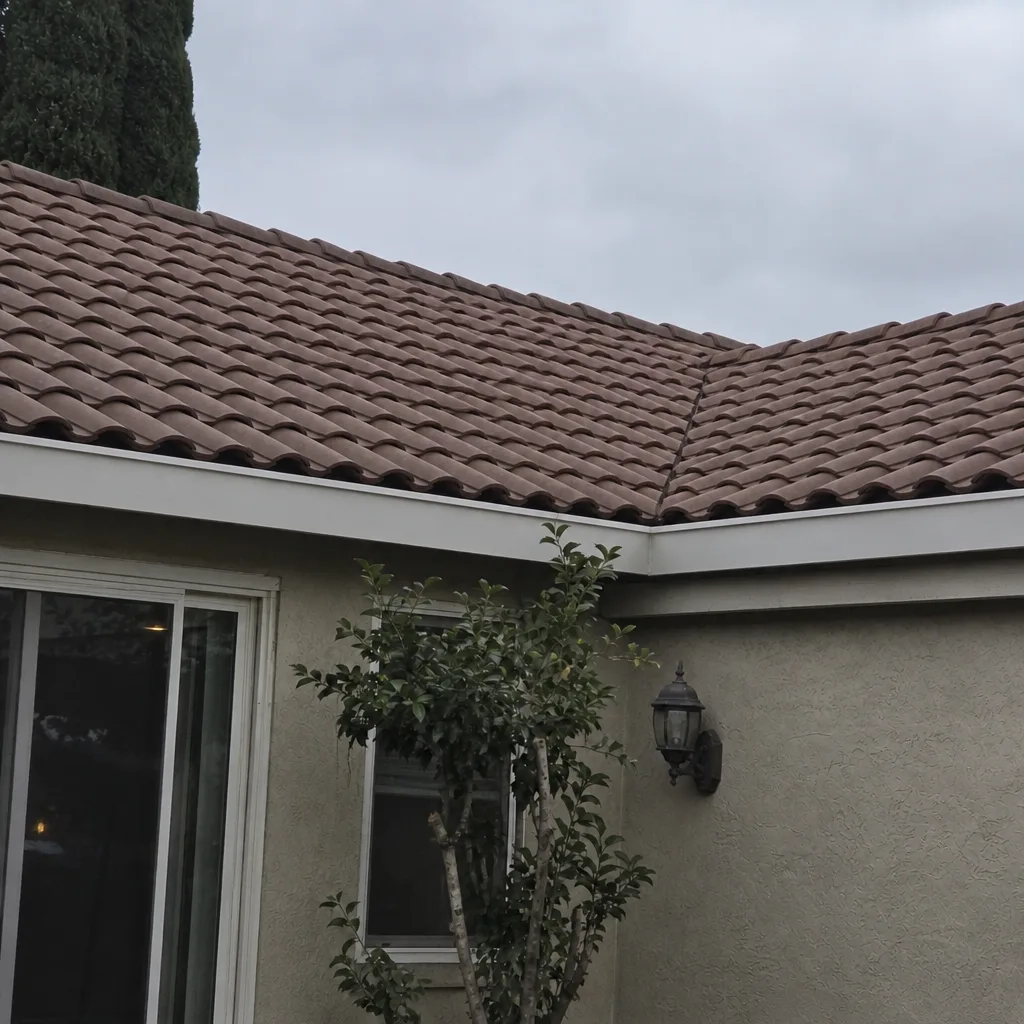 After
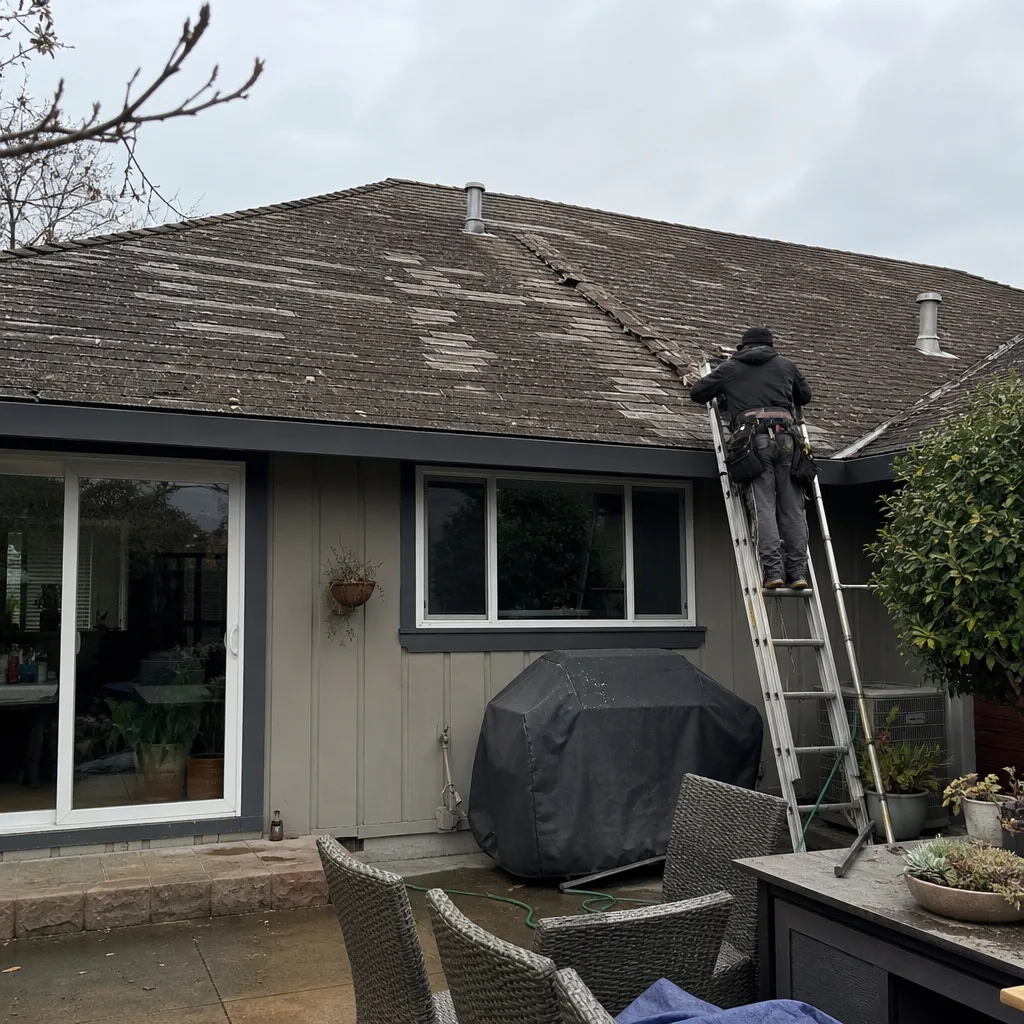 Before
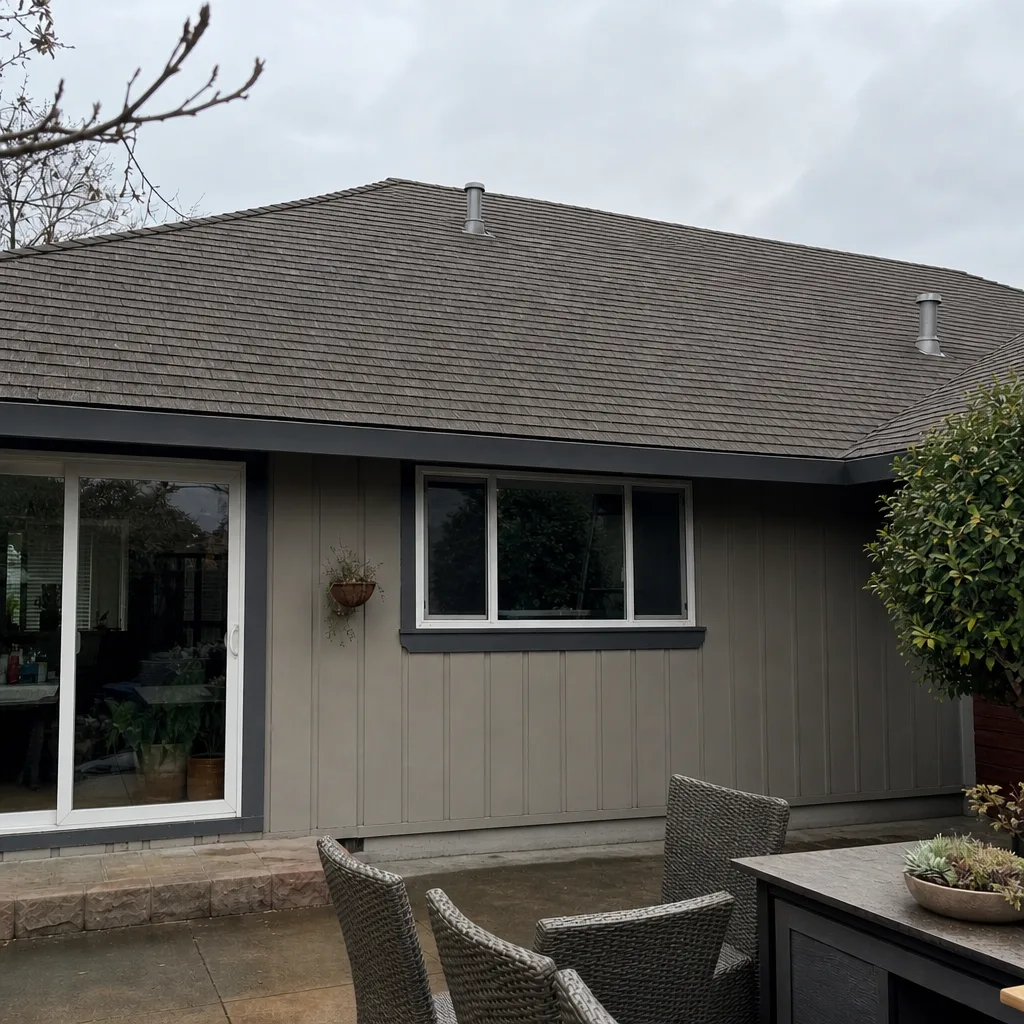 After
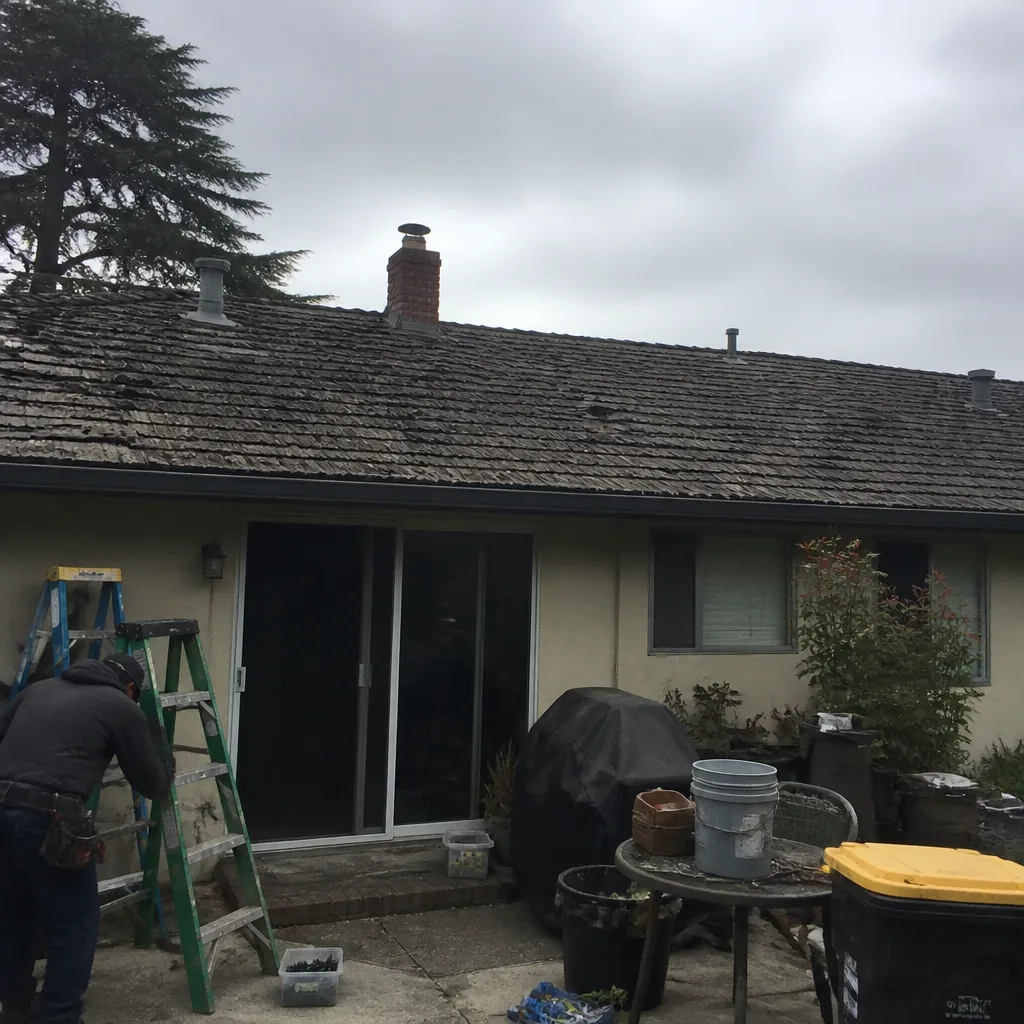 Before
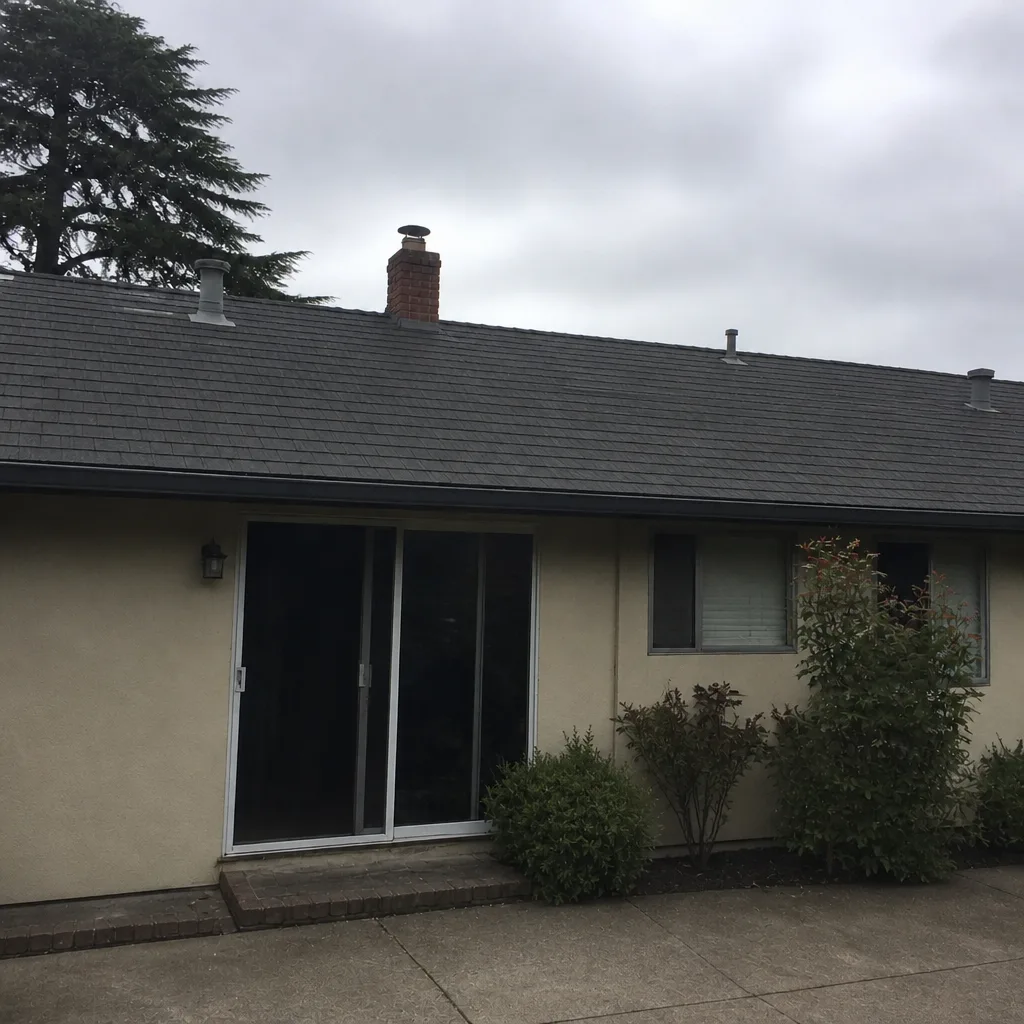 After
When to Call a Professional
Call a professional roofer in Sunnyvale when you see active leaking, missing or blown-off shingles, granules in the gutter, visible sagging at the ridge, ceiling stains, or a roof that’s reached the end of its expected lifespan. Call immediately after a big wind event if you see displaced shingles or a gap in the roof surface. Call before you accept a contractor’s quote if the scope involves a full replacement and you’re not sure whether a permit is required. And call when you’re buying or selling a Sunnyvale home and the roof condition or permit history is unclear – an inspection resolves the question in one visit. Sunnyvale Roofer offers free estimates in Sunnyvale – call (833) 349-3199. We answer 24/7. Fast dispatch from 7am to 7pm, Sunday through Friday. Every job starts with an honest inspection, whether the result is a repair, a partial, or a full replacement.
Frequently Asked Questions
Yes, a full roof replacement in Sunnyvale almost always requires a City of Sunnyvale building permit. The exception is small like-for-like repairs where only a handful of shingles or tiles are replaced. Anything close to a full tear-off and re-roof should be permitted. Call (833) 349-3199 for a free estimate and we’ll confirm your scope before any paperwork begins.
Yes. California Title 24 energy code applies to roof replacements in Sunnyvale and typically requires cool roof compliance and, in many cases, an attic insulation upgrade. The permit application usually needs Title 24 documentation, and the final inspection checks that the installed material matches the compliance path. We handle the Title 24 documentation as part of the permit. Call (833) 349-3199 to schedule a free estimate.
An HOA approval reviews aesthetics and neighborhood consistency, while a City of Sunnyvale permit reviews code and life-safety compliance. You need both if your Sunnyvale property is in an HOA. Neither substitutes for the other, and the two run on separate timelines. Call (833) 349-3199 to talk through your specific community’s requirements.
The Sunnyvale permit timeline depends on scope and how fast the application and Title 24 documentation come together; HOA approval is typically the longer of the two tracks. The inspection stages themselves add days, not weeks, when the job follows the permitted plans. Call (833) 349-3199 for a free estimate and a realistic timeline for your specific roof.
A City of Sunnyvale roof inspection is a compliance check at two stages: rough-in, after tear-off and before the new covering goes on, and final, after the roof is complete. The rough-in reviews deck condition, underlayment, flashing, and edge metal; the final confirms the covering, penetrations, and Title 24 documentation. A standalone roof inspection from us, separate from the city inspection, diagnoses repair vs. replacement before anything else. Call (833) 349-3199 to book the diagnostic inspection first.
Homeowners can pull their own permits in many California jurisdictions, including Sunnyvale, but roof replacement involves working at height, fire-rated assemblies, and Title 24 documentation that’s easy to get wrong. A mistake in the assembly shows up years later, and unpermitted work is one of the most common resale snags in Santa Clara County. We recommend a licensed and insured professional for anything beyond a small repair. Call (833) 349-3199 for a free estimate.
The Bottom Line
In Sunnyvale, a roof replacement almost always requires a City of Sunnyvale permit, and even a like-for-like replacement typically triggers one. Title 24 cool roof and insulation requirements apply, and the permit application needs documentation to prove compliance. HOA approval runs alongside the city permit in Sunnyvale’s planned communities, and you need both. The two inspection stages – rough-in and final – are gates, not formalities, and passing them cleanly depends on how the job is run. The permit is the cheapest part of the project and the one that protects your home’s value at resale. If you’re at the point of deciding between repair and replacement, start with a diagnostic inspection. Call Sunnyvale Roofer at (833) 349-3199 for a free estimate. We answer 24/7. Fast dispatch from 7am to 7pm, Sunday through Friday. We work with seven leading roofing brands so the material fits your home and the code, not our supply order – and that’s what makes the permit and inspection process go smoothly in Sunnyvale.
Written by the team at Sunnyvale Roofer.